
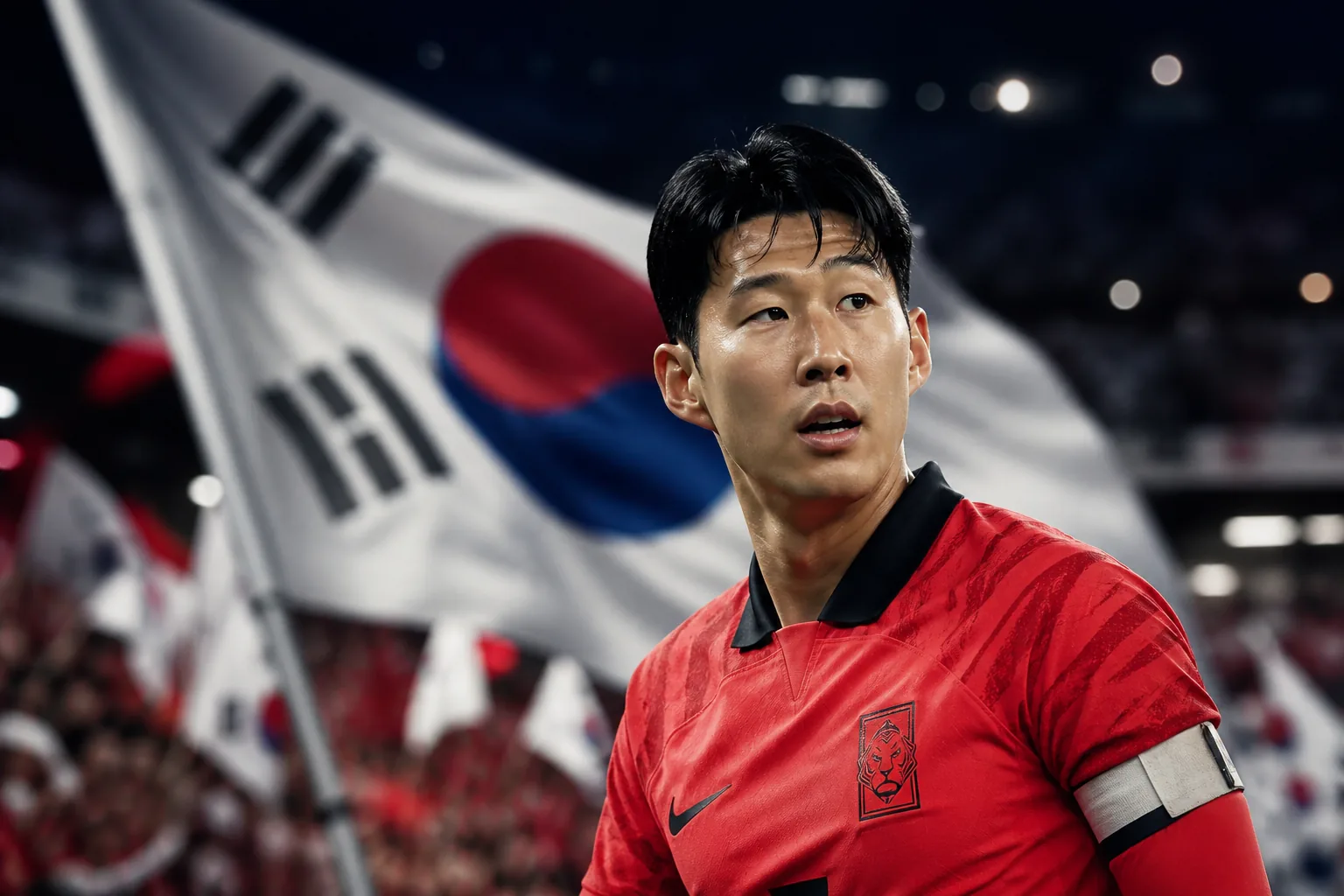
South Korea are one of Asia's most visible football nations. They have qualified for more World Cups than any other Asian team, produced stars such as Son Heung-min and reached the semi-finals on home soil in 2002. But their last AFC Asian Cup title came in 1960. The Taegeuk Warriors have spent decades building a global football identity while waiting for the continental trophy that once belonged to them.
World Cup 2026 status
South Korea qualified for the 2026 FIFA World Cup and finished in the group stage.
| 2026 status | Qualification route | Outcome |
|---|---|---|
| Qualified and participated | AFC qualifying | Group stage |

South Korea won the first AFC Asian Cup
South Korea defended the Asian Cup title in Seoul

Reached the World Cup semi-final after beating Italy and Spain

Lost the Asian Cup final 2-1 after extra time to Australia

Beat Portugal and reached the World Cup round of 16

Still waiting for a third Asian Cup title
A long drought hiding behind global progress
South Korea won the first two Asian Cups, in 1956 and 1960. That early success made them one of the founding powers of Asian football, but the third title never arrived. Since 1960, the team has reached finals and semi-finals without finishing another tournament as champion.
The drought is unusual because South Korea have not stood still. Their domestic league grew, their players moved to Europe and their World Cup record improved. The country became a global football presence without solving the one regional challenge that began six decades ago.

1956 and 1960: the first Asian champions
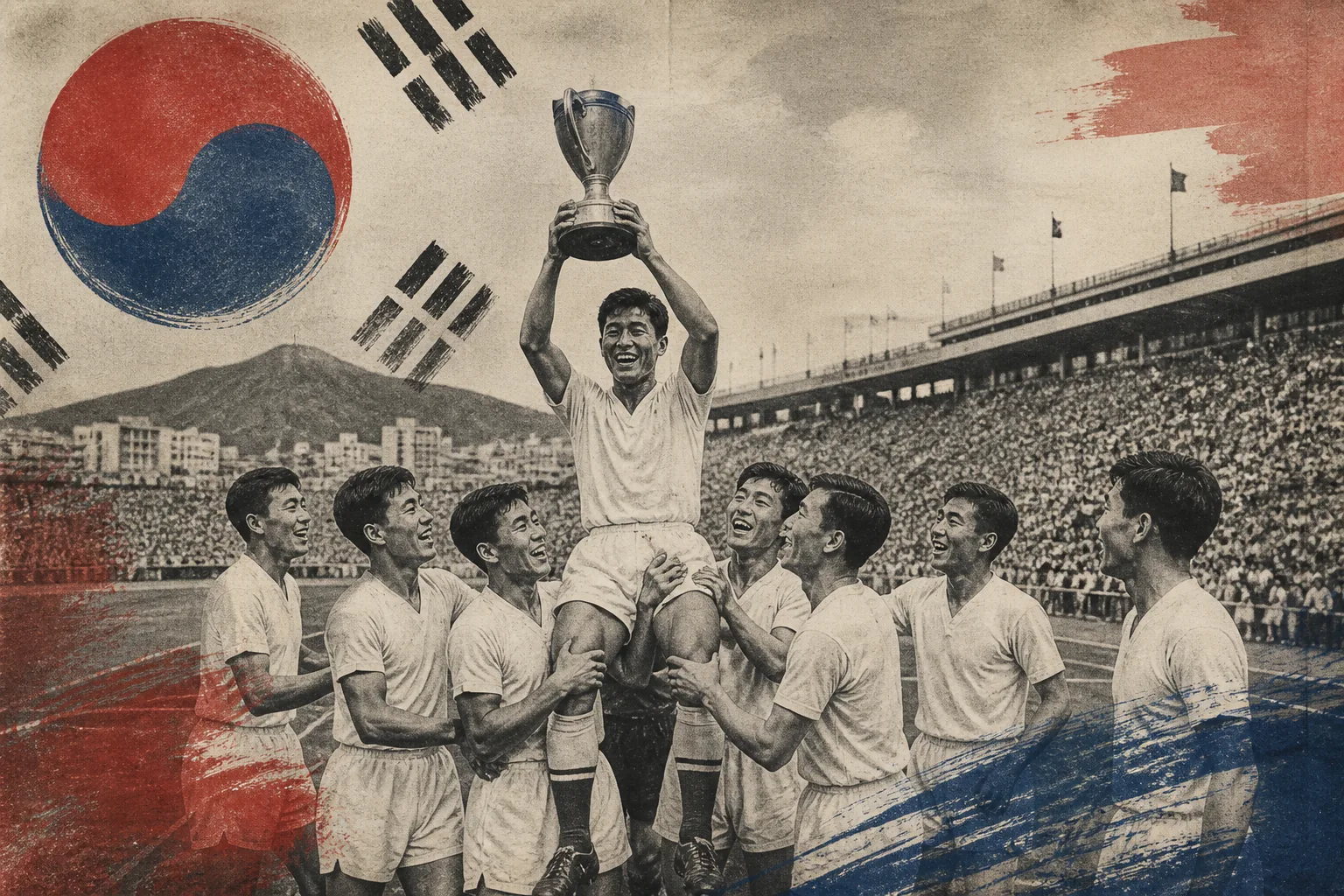
South Korea won the inaugural Asian Cup in 1956 and defended the title four years later. The 1960 tournament was played in Seoul, where the hosts finished above Israel, the Republic of China and Vietnam Republic in the final round.
Those victories established South Korea as the first great force of Asian international football. The problem is that the standard set by that early generation has survived far longer than the trophy itself. Every new Korean team eventually gets compared with the side that won back-to-back continental championships.
South Korea's tournament profile

A regular World Cup team still searching for a final
South Korea gradually became Asia's most reliable World Cup representative. Qualification was no longer a once-in-a-generation achievement, and the team gained experience against stronger opponents. But the Asian Cup remained frustrating: South Korea often went deep, yet the final step kept escaping them.
The contrast became part of the national team's identity. South Korea could be brave, fit and difficult to break in a World Cup, but continental tournaments demanded a different kind of control. Winning a title required not only energy and pressure, but also patience across several matches.
2002: the home World Cup that changed everything
Co-hosting the 2002 World Cup transformed South Korean football. Guus Hiddink's team defeated Portugal in the group stage, then beat Italy in extra time and Spain on penalties. They became the first Asian team to reach a World Cup semi-final and finished fourth after losing to Germany and Turkey.
The run created a generation of national heroes: Park Ji-sung, Ahn Jung-hwan, Hong Myung-bo and Lee Young-pyo became symbols of a team that refused to accept the old limits. It also created a new expectation. South Korea were no longer satisfied with qualifying; the country wanted another historic tournament every time.
Finals, famous wins and the missing Asian Cup
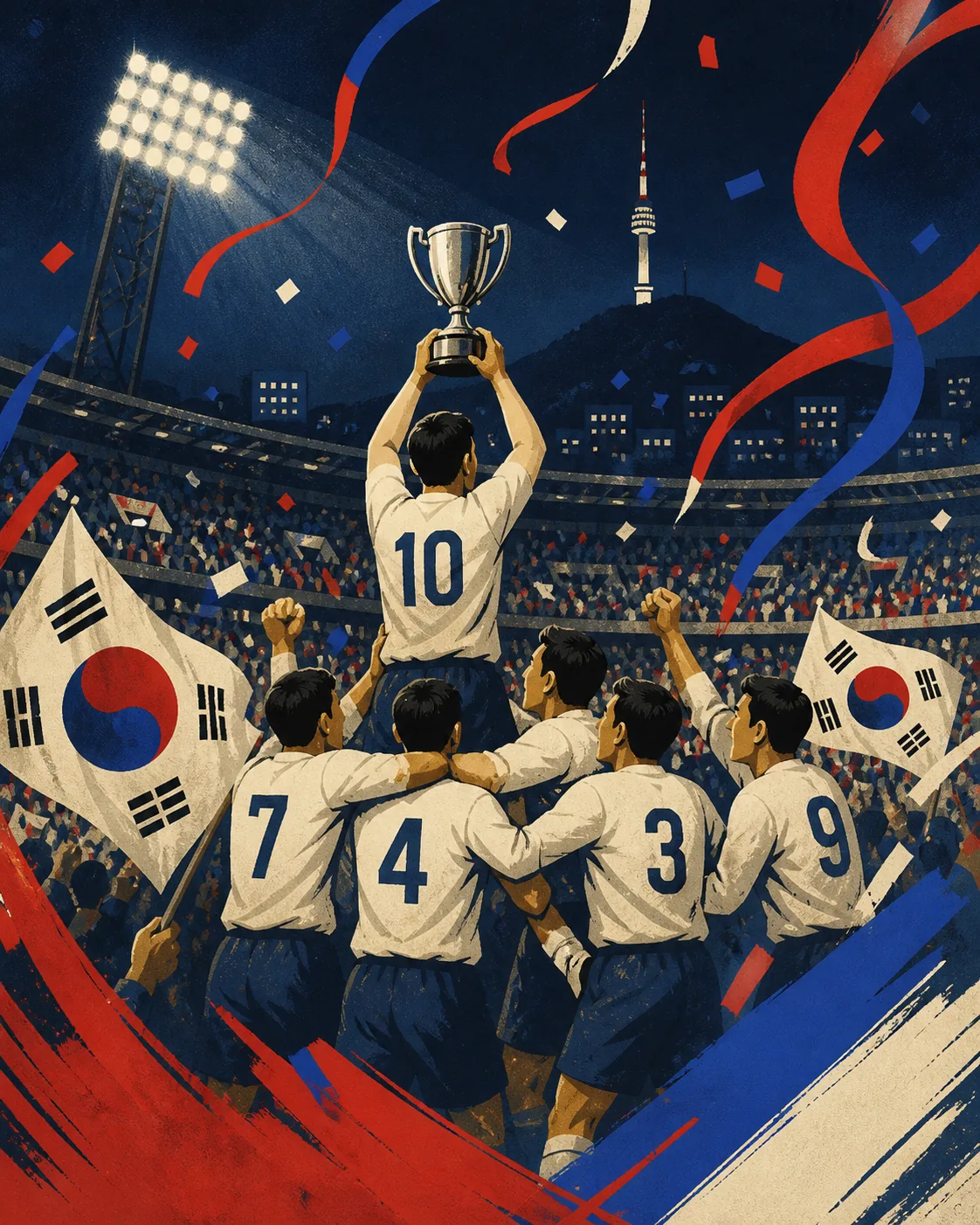
South Korea reached the 2015 Asian Cup final but lost 2-1 to Australia after extra time. The defeat extended the wait, even though the team had shown the discipline to navigate a difficult tournament.
At the 2022 World Cup, South Korea produced another memorable group-stage moment by beating Portugal and reaching the round of 16. Son Heung-min's generation had the speed and talent to challenge elite opponents, but the continental trophy still remained out of reach.
Son Heung-min and the pressure of the next generation
Son Heung-min is the clearest global symbol of South Korea's progress. He became a Premier League winner, a prolific scorer and one of the most recognisable Asian players in football history. Yet international greatness is still measured by the team trophy that has avoided South Korea since 1960.
Son's presence raises the ceiling, but the Asian Cup is won by a squad. South Korea need defensive stability, midfield control and enough attacking depth to survive the late rounds. The next title cannot depend on one star rescuing every match.
South Korea's major tournament record at a glance
| Tournament | Best result | Most recent |
|---|---|---|
| AFC Asian Cup | Winner | 1960 |
| FIFA World Cup | Fourth place | 2022 round of 16 |
| Asian Cup titles | 2 | 1956, 1960 |
| Current major-trophy wait | 66 years | Since 1960 |
What would end South Korea's trophy drought?
The answer is simple to state: win the Asian Cup for the first time in 66 years. The harder part is building a tournament team that can turn South Korea's excellent individual talent into control over a full three-week campaign.
A third Asian Cup would connect two very different eras — the pioneers of 1956 and 1960 and the globally experienced generation led by Son. It would also give South Korea a new reference point after decades of being known more for World Cup moments than continental championships.
The wait is long, but the story is not finished. South Korea have the football culture, the player pathway and the international confidence. They need one champion team to complete the unfinished sentence that began in 1960.
The road from early Asian dominance to a new Korean challenge
Frequently asked questions
How many Asian Cup titles has South Korea won?
South Korea have won two AFC Asian Cup titles, in 1956 and 1960.
When did South Korea last win a major trophy?
South Korea last won a major trophy at the 1960 Asian Cup, played in Seoul.
What is South Korea's best World Cup result?
South Korea reached the semi-final and finished fourth at the 2002 World Cup, the best result by an Asian team at that time.
Why is the 2002 World Cup so important to South Korea?
South Korea beat Portugal, Italy and Spain on the way to the semi-final, creating the defining football story of the country's modern era.
Can South Korea win a third Asian Cup?
Yes. South Korea regularly produce players capable of competing internationally, but they must turn that individual quality into a complete tournament-winning squad.
Data sources & verification for South Korea
Last verified 2026-09-09. Trophy dates are checked against official competition information and the relevant football confederation.
See South Korea's full trophy history, live counter, World Cup record and major-tournament profile.
View South Korea's country profile →