

South Sudan became independent in 2011 and FIFA's 209th member association in 2012, so the Bright Stars are building an international record almost from zero. They have never qualified for the Africa Cup of Nations or FIFA World Cup. The 2026 World Cup campaign ended at the bottom of CAF Group B, but it also restored competitive football to a renovated Juba National Stadium and produced draws against Togo, Sudan and Mauritania. More importantly, South Sudan beat Djibouti 4-1 on aggregate in March 2026 to reach the group stage of AFCON 2027 qualifying. Matches against Egypt, Angola and Malawi now offer the clearest route yet to the country's first senior major finals.
World Cup 2026 status
South Sudan drew five matches but did not record a win in CAF Group B. Heavy home defeats by DR Congo and Senegal underlined the gap to the contenders, and the Bright Stars finished sixth with five points.
| 2026 status | Qualification route | Outcome |
|---|---|---|
| Eliminated in CAF Group B | Sixth in the first qualifying round | 5 points from ten matches |

South Sudan became the world's newest sovereign state
The federation became FIFA's 209th member

The renovated Juba National Stadium reopened before the Sudan qualifier

Five draws produced sixth place in 2026 World Cup qualifying

South Sudan eliminated Djibouti to reach the AFCON 2027 qualifying group stage
A national team and its infrastructure are growing together
South Sudan joined FIFA on 25 May 2012, less than a year after independence. That date explains both the excitement around the national team and the size of the task. Long-established opponents can draw on decades of coaching systems, domestic competition and international experience; the Bright Stars are still creating those layers.
A major physical step arrived in June 2024 when the renovated Juba National Stadium reopened before a World Cup qualifier against Sudan. FIFA said nearly USD 7 million in Forward funding and a relief loan supported the work. The 7,000-capacity venue gave the senior team a modern home rather than forcing every competitive fixture into a neutral country.
Home matches alone do not produce qualification, but they reduce travel disruption, give local supporters a direct relationship with the team and make each camp feel less temporary. The next infrastructure target is a national technical centre that can connect youth identification, coaching education and senior preparation.
The diaspora remains another part of the player pool. South Sudanese-qualified footballers develop in Australia, East Africa and Europe. Recruitment can raise the ceiling, but continuity matters just as much: a stable spine needs repeated camps together rather than a completely different squad every window.
South Sudan's senior tournament markers
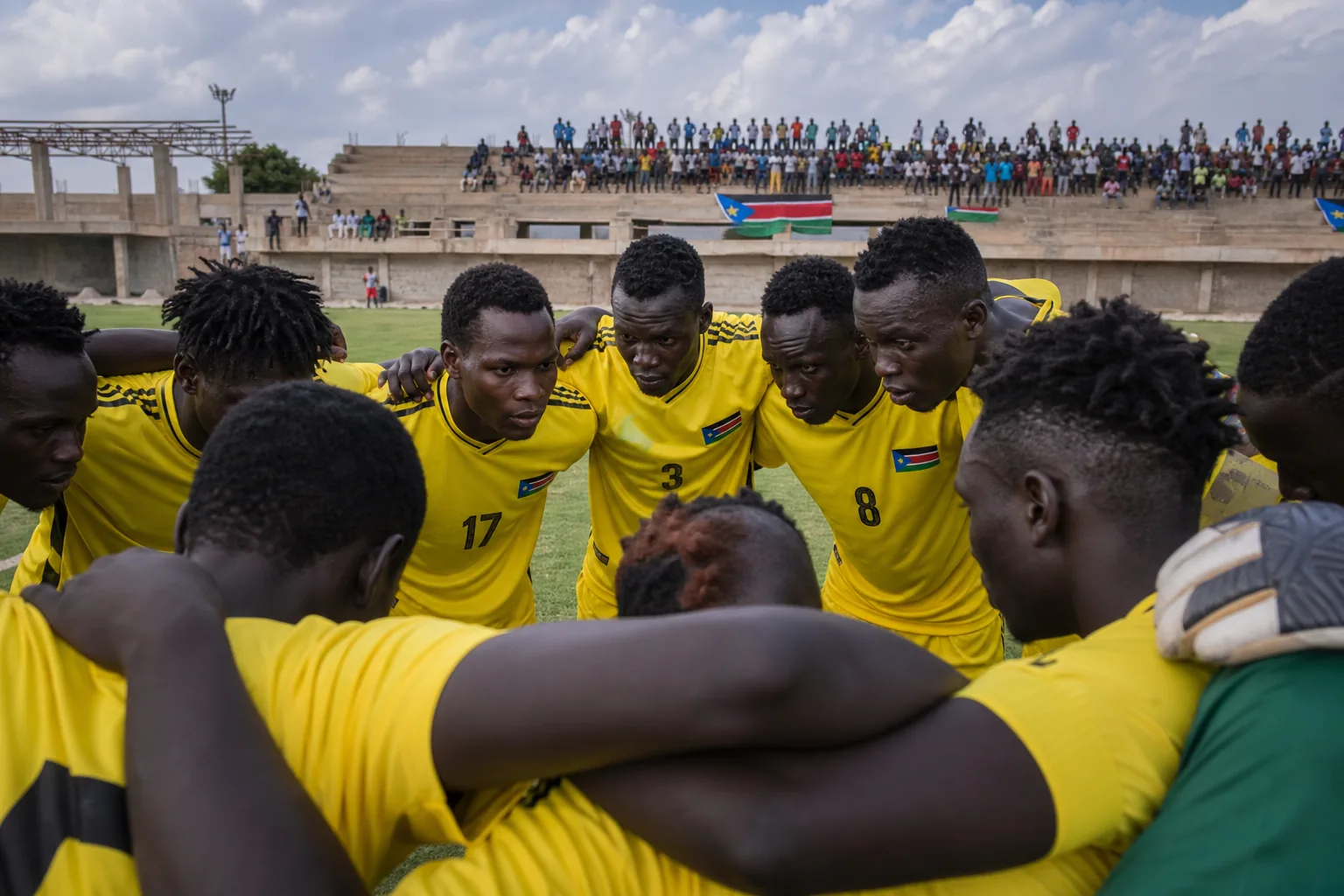
Five draws were not enough in 2026 World Cup qualifying
South Sudan were placed with Senegal, DR Congo, Sudan, Togo and Mauritania in CAF Group B. They opened with a 4-0 defeat by Senegal, then drew with Mauritania and later collected points from both meetings with Togo, an away draw with Sudan and another draw in Mauritania.
The strongest single result was the 1-1 draw against Sudan in March 2025. It showed that the Bright Stars could stay compact and compete in an emotionally significant regional fixture. The broader table was less forgiving: five draws, five defeats and no victories meant a sixth-place finish on five points.
The decisive gap appeared against the leading sides. DR Congo won 4-1 in Juba in September 2025, and Senegal followed with a 5-0 victory in October. Those games exposed difficulty defending repeated penalty-area entries after the first press had been broken.
The tactical lesson is not simply to defend deeper. South Sudan need a dependable escape after regaining possession. If the first forward is isolated, the ball returns immediately and the defensive block must survive another wave. Two nearby passing options would help the team turn clearances into possessions and reduce the physical load.
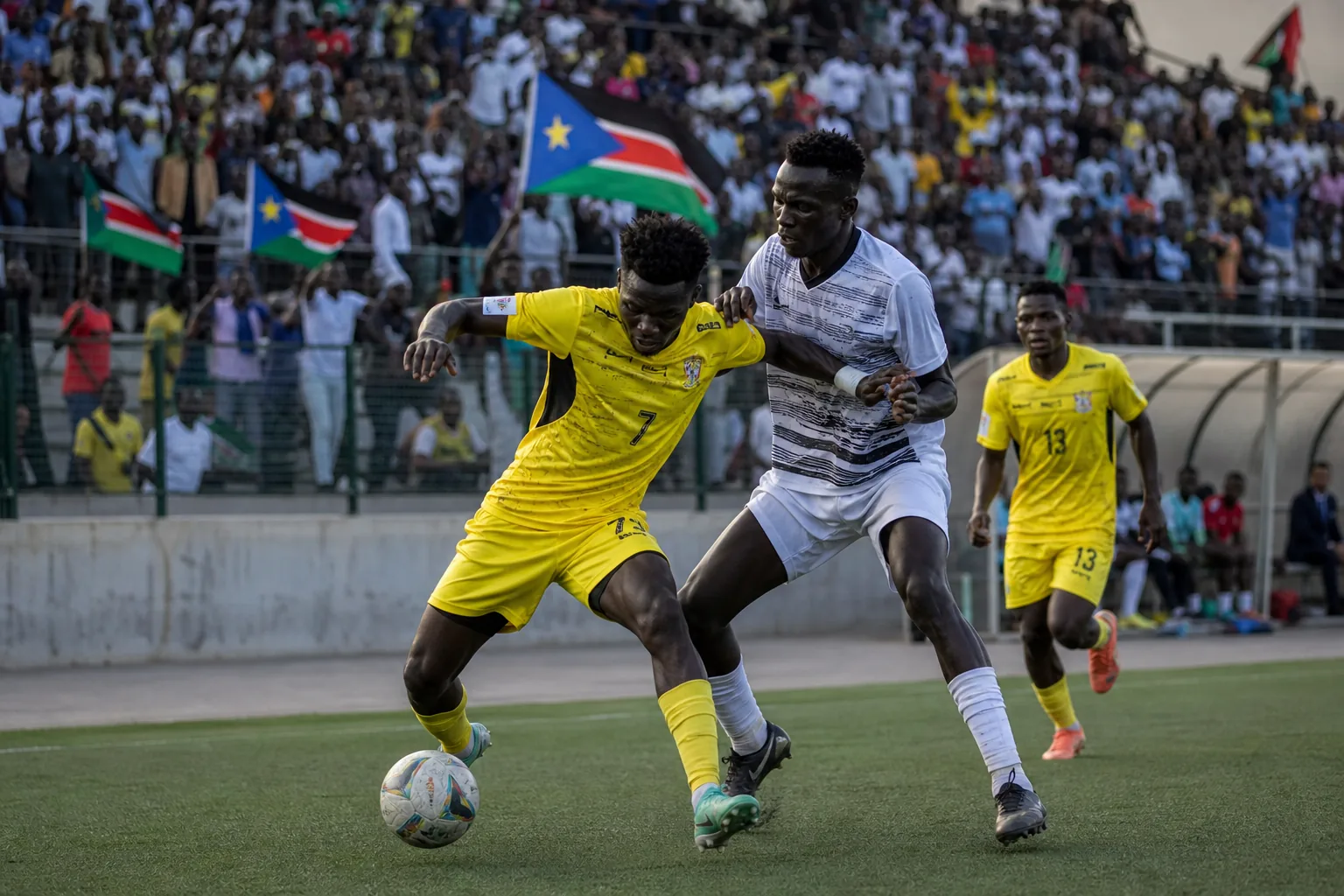
The Djibouti tie turned AFCON 2027 into a live opportunity
South Sudan entered AFCON 2027 qualifying in the preliminary round against Djibouti. A 4-0 first-leg victory created control of the tie. Djibouti won the return 1-0 in Juba, but the Bright Stars advanced 4-1 on aggregate.
The distinction is important: South Sudan have not qualified for AFCON yet. They have qualified for the group stage of the qualifying competition. CAF placed them in Group B with record seven-time champions Egypt, Angola and Malawi. The top two qualify because the group does not contain a tournament co-host.
South Sudan lost 1-2 away to Malawi on 25 September and 0-5 at home to Egypt on 29 September. Their next AFCON 2027 qualifying fixtures are in the November window, beginning away to Angola. The opening results underline the step up from the preliminary round to a group containing several established sides. CAF — Matchdays 1–2 results and fixtures.
The Malawi away match is already complete. After two defeats, South Sudan need their November meetings with Angola to produce points; the opening window can no longer be presented as an opportunity still to come.
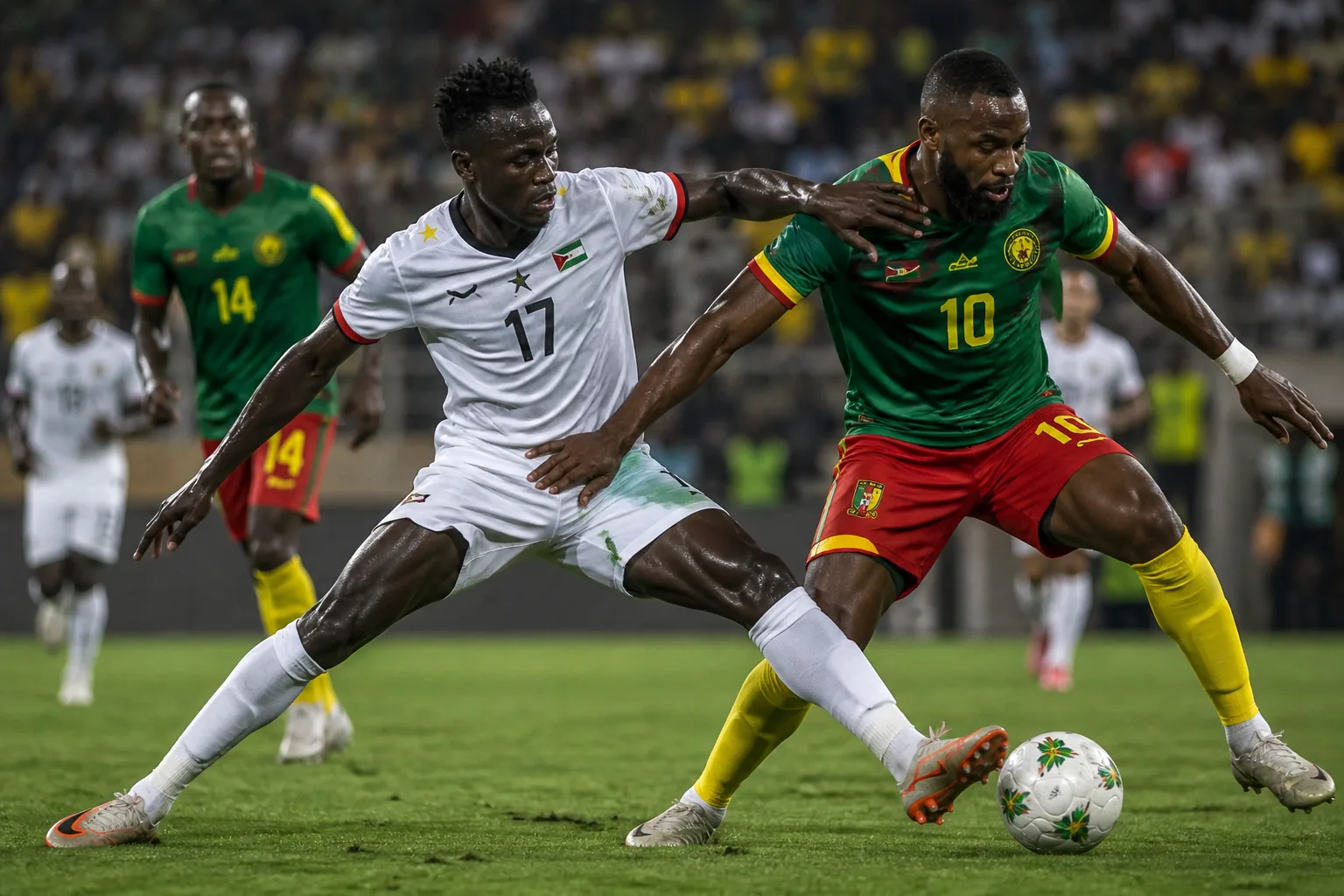
South Sudan's senior men's record at a glance
| Competition | Best or latest result | Correct context |
|---|---|---|
| Africa Cup of Nations | Never qualified | No senior men's finals appearance |
| AFCON 2027 qualifying | Group stage | Beat Djibouti 4-1 on aggregate in the preliminary round |
| FIFA World Cup | Never qualified | No men's finals appearance |
| 2026 World Cup qualifying | Sixth in CAF Group B | Five points from ten matches |
| FIFA membership | Since 2012 | Joined as FIFA's 209th member association |
| Major senior titles | None | A first AFCON qualification is the immediate landmark |
Regional and youth results are valuable development markers, but they do not change the senior major-tournament total. South Sudan's drought ends only with a recognised senior continental or world title; the more realistic first breakthrough is simply reaching AFCON.
What the Bright Stars need to compete across six qualifiers
The first priority is continuity through the centre. Goalkeeper Majak Mawith produced important saves in the 0-0 draw with Togo, but the protection in front of him must become more consistent. A settled centre-back pairing and holding midfielder would give the team clearer references under pressure.
The second is a better first attacking pass. South Sudan can run into space, yet direct balls often arrive without support. One midfielder moving close to the striker and the far winger narrowing early would create a route to keep possession rather than merely delay the next attack.
The third is set-piece efficiency. In a group containing stronger possession teams, corners and wide free kicks may provide the best chances. Delivery, screening and second-ball positions need to be rehearsed as repeatable patterns.
The fourth is using Juba as a genuine advantage. The restored stadium gives supporters and players a shared home, but the heavy defeats there in the World Cup campaign show that emotion must be paired with game management. Early control matters more than an uncontrolled opening.
AFCON 2027 qualification would be transformational: a first senior major finals, a new reference point for young players and proof that infrastructure investment can reach the pitch. The Djibouti tie opened the door. The six Group B matches will decide whether South Sudan are ready to walk through it.
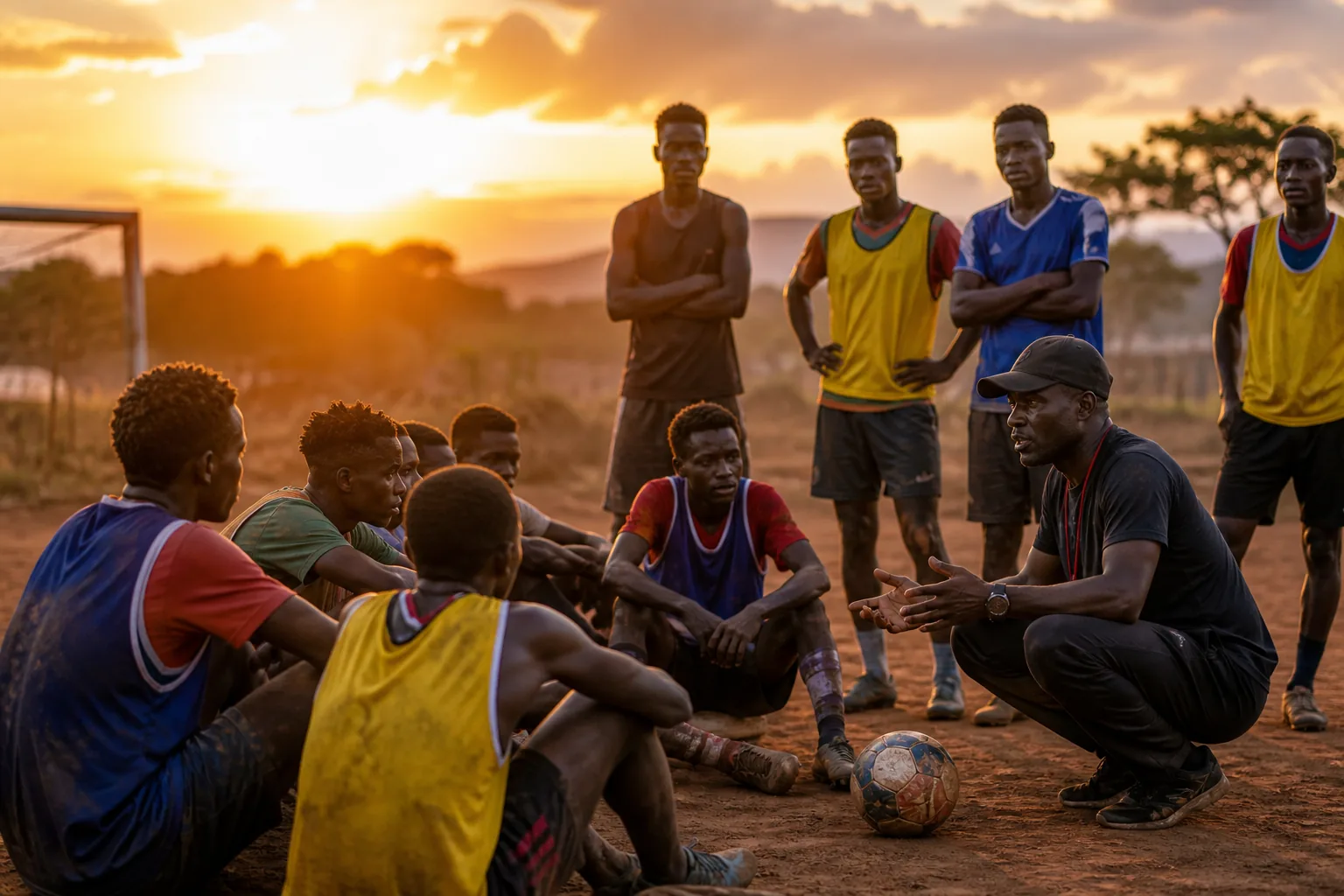
South Sudan's route from a new federation to a first AFCON appearance


Frequently asked questions
Has South Sudan ever qualified for the Africa Cup of Nations?
No. The Bright Stars have never reached the senior men's AFCON finals.
Has South Sudan ever qualified for the FIFA World Cup?
No. South Sudan have entered three World Cup qualifying campaigns but have never reached the finals.
How did South Sudan perform in 2026 World Cup qualifying?
They finished sixth in CAF Group B with five points from ten matches: five draws, five defeats and no wins.
Did South Sudan qualify for AFCON 2027?
Not yet. They beat Djibouti 4-1 on aggregate to reach the group stage of qualifying, where they face Egypt, Angola and Malawi.
When is South Sudan's next match?
South Sudan lost 1-2 to Malawi and 0-5 to Egypt. Their next AFCON 2027 qualifier is away to Angola in the November 2026 window. CAF results and fixtures.
When did South Sudan join FIFA?
South Sudan became FIFA's 209th member association on 25 May 2012.
Data sources & verification for South Sudan
Trophy dates are checked against official competition information and the relevant football confederation.
- FIFA — South Sudan Football Federation profile
- FIFA — South Sudan became the 209th association in 2012
- FIFA — inauguration of the renovated Juba National Stadium
- FIFA — African 2026 World Cup qualifying results
- CAF — South Sudan and Togo close qualifying with a draw
- CAF — South Sudan advance past Djibouti
- CAF — AFCON 2027 qualifying draw and Group B
- CAF — AFCON 2027 Matchdays 1 and 2 fixtures
See South Sudan's Waiting Room profile, major-tournament history and live counter.
View South Sudan's Waiting Room profile →Record sources
These records support the specific match results, competition stages and chronological corrections discussed above.