
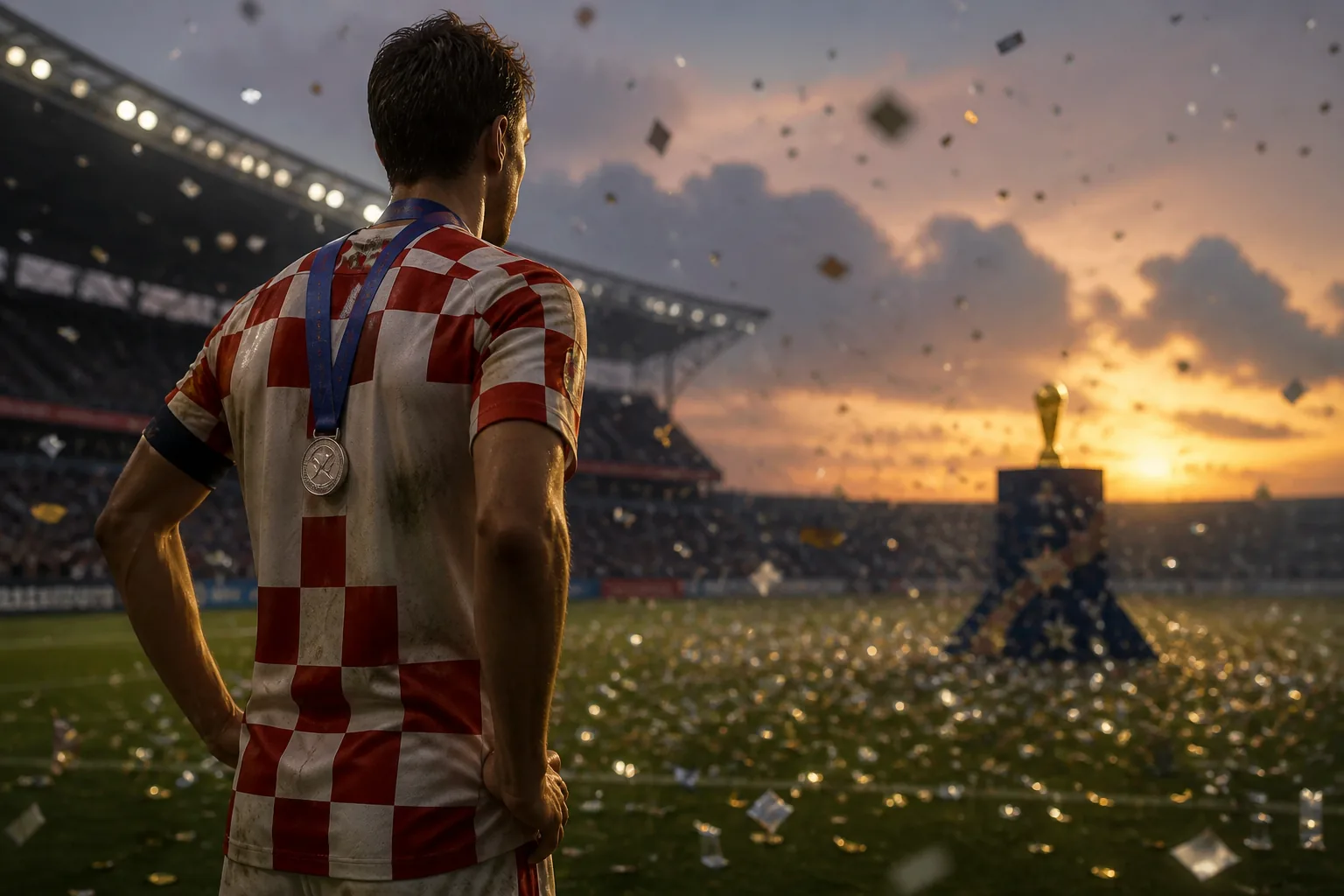
Croatia are one of the most remarkable small nations in modern football. Since independence, they have reached a World Cup final, won three World Cup medals and produced Luka Modrić, one of the greatest midfielders of his generation. Yet Croatia have never won the World Cup or the European Championship. Their trophy drought is the story of a team that keeps exceeding expectations while waiting for the final victory.
World Cup 2026 status
Croatia qualified for the 2026 FIFA World Cup and reached the round of 32.
| 2026 status | Qualification route | Outcome |
|---|---|---|
| Qualified and participated | UEFA qualifying | Round of 32 |

Croatia beat the Netherlands to win bronze at their first World Cup as an independent nation

France beat Croatia 4-2 in the World Cup final

Argentina beat Croatia in the World Cup semi-final

Croatia beat Morocco to win another World Cup bronze medal

Croatia exited the European Championship group stage

A 2-1 defeat ended Croatia's 2026 World Cup run in the round of 32

Still waiting for a first major senior trophy
A finalist without a major trophy
Croatia have no World Cup or EURO title, but their World Cup record is extraordinary. This tracked-title definition does not treat medals, invitational honours or a Nations League runners-up finish as a World Cup or EURO trophy. The country reached the semi-final in 1998, the final in 2018 and the semi-final again in 2022. Few teams have produced such a high level of tournament football with such a small population.
The missing trophy changes the mood around every new campaign. A quarter-final is no longer a miracle. After the Modrić generation proved that Croatia could compete with anyone, the expectation is now to finish the story with gold.
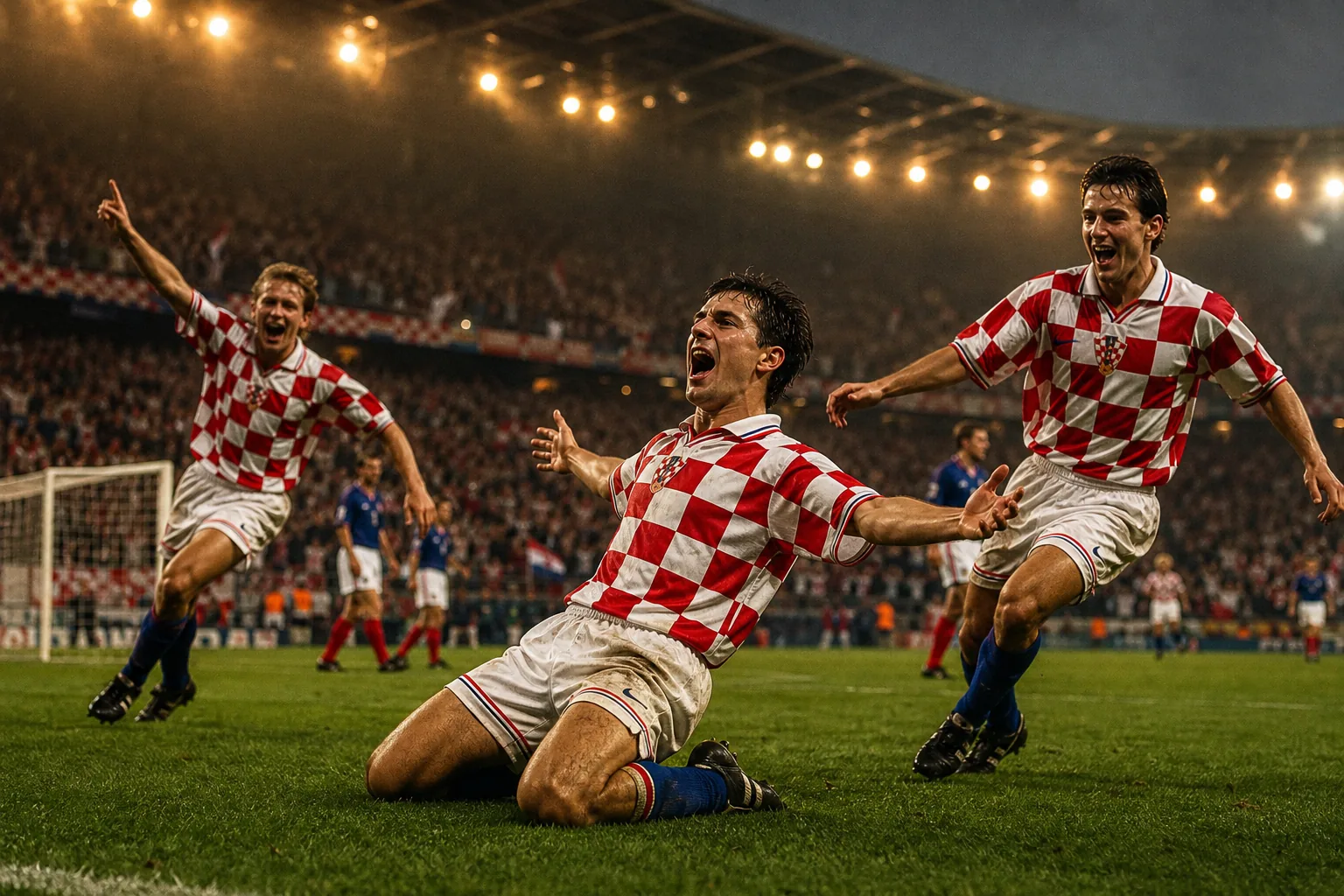
1998: the first generation announces Croatia
Croatia's first World Cup as an independent nation ended with a remarkable third-place finish in France. Davor Šuker won the Golden Boot, and Croatia eliminated Germany 3-0 in the quarter-final before losing to hosts France in the semi-final.
The bronze medal created the country's first football mythology. Šuker, Robert Prosinečki and Zvonimir Boban showed that Croatia could produce technical players and compete on the biggest stage immediately after independence.
Croatia's tournament profile
2018: Modrić leads Croatia to the final
Croatia won all three group matches at the 2018 World Cup, then survived three consecutive knockout matches that went beyond 90 minutes. They won two consecutive penalty shootouts before Mario Mandžukić scored the extra-time winner against England in the semi-final.
The final against France began with an own goal and ended in a 4-2 defeat, but the result did not diminish the campaign. Luka Modrić won the Golden Ball, Ivan Rakitić controlled the midfield and Croatia had reached the biggest match in world football for the first time.
2022: another medal, another unfinished story
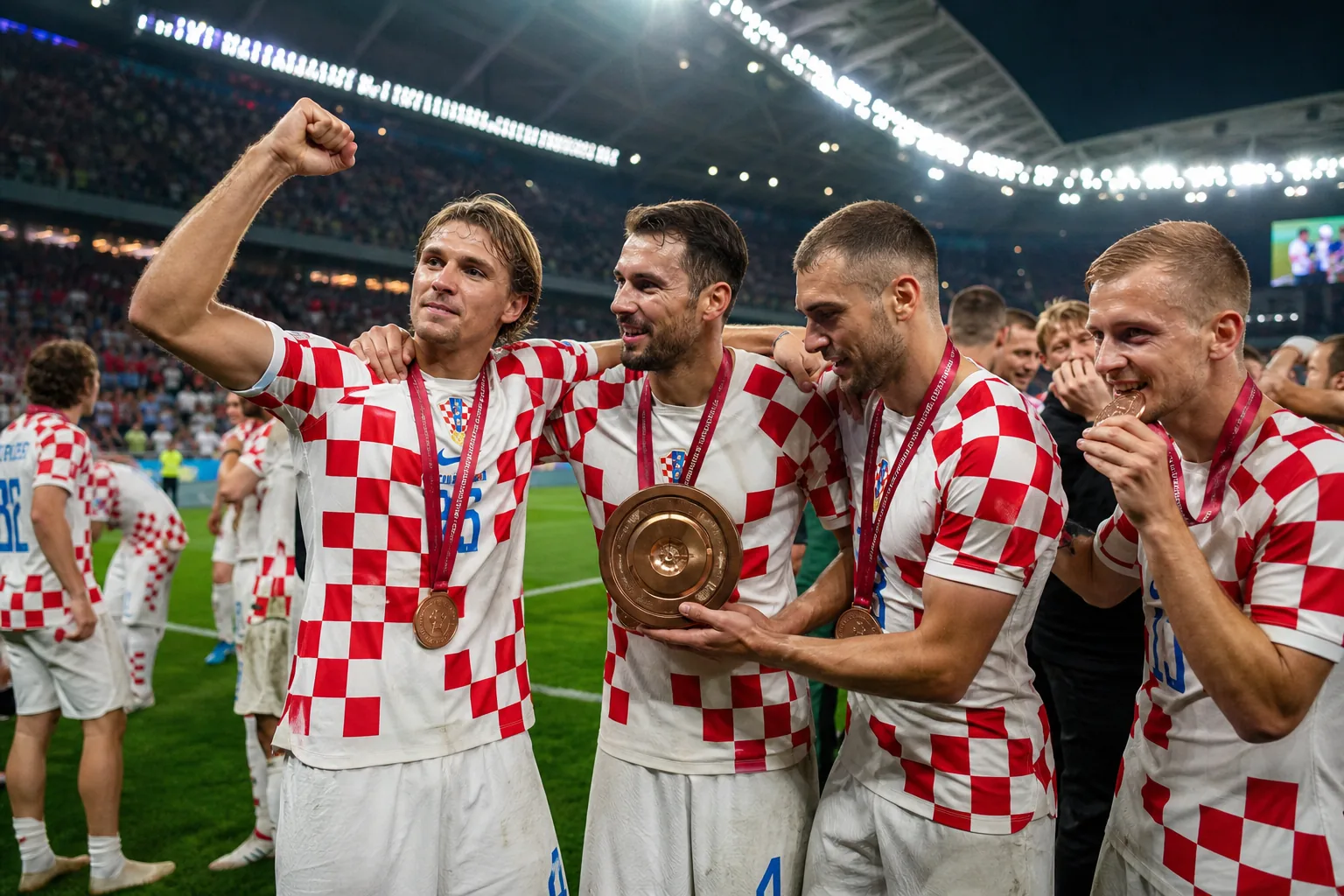
Four years later Croatia reached the semi-final again. They eliminated Japan and Brazil on penalties, proving that the team's resilience was not limited to one tournament. Argentina beat them in the semi-final, but Croatia recovered to defeat Morocco and win the bronze medal.
Back-to-back medals in 2018 and 2022, added to the 1998 bronze, turned Croatia into a tournament specialist. The problem was that each medal also made the missing gold more visible. The team knew how to survive, but still had not found the final step.
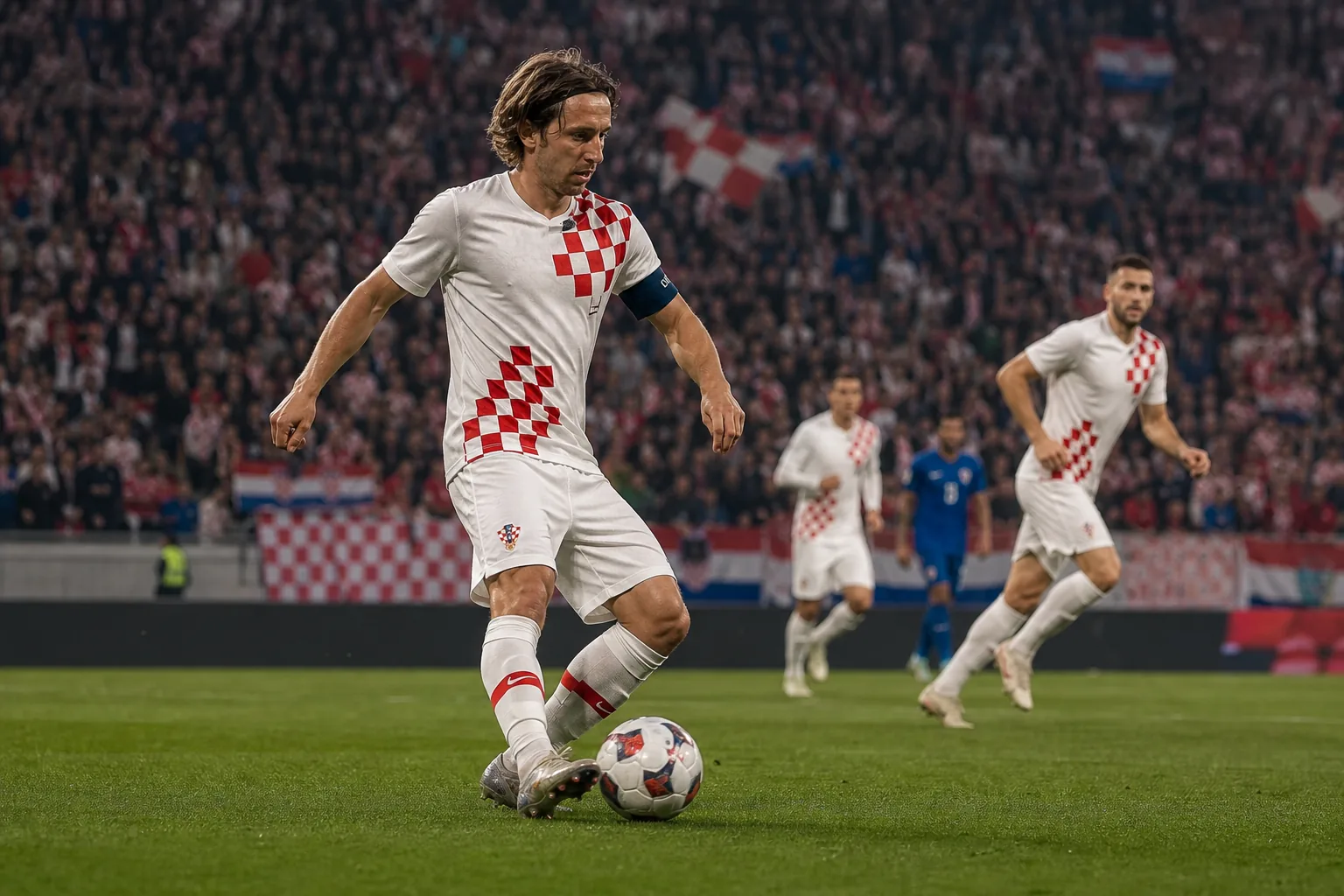
The Modrić era and the value of midfield control
Modrić became the symbol of Croatia's modern rise. His passing, movement and calmness allowed the team to control matches against bigger nations. Around him, players such as Rakitić, Mateo Kovačić, Marcelo Brozović and Mandžukić created a midfield-first identity that made Croatia difficult to overwhelm.
That generation also showed the cost of relying on experience. Long knockout campaigns demanded extra time, penalties and enormous physical effort. Croatia often looked stronger as the pressure increased, but every tournament brought the same question: how long can the core keep carrying the team?
A new team after the golden generation
Croatia's next challenge is not to copy the 2018 finalists. It is to build a younger team that can keep the same composure without Modrić controlling every important possession. The transition is difficult because the old generation set an almost impossible standard.
The 2026 World Cup gave Croatia another global stage and a chance for the next group to create its own reference point. The completed 2026 campaign ended in the round of 32 with a 2-1 defeat to Portugal. The next cycle must show that the country's football system can sustain success beyond one exceptional generation.

Croatia's major tournament record at a glance
| Tournament | Best result | Key year(s) |
|---|---|---|
| FIFA World Cup | Runner-up | 2018; R32 in 2026 |
| UEFA European Championship | Quarter-final | 1996, 2008 |
| Major titles | None | Still waiting |
| World Cup appearances | 7 | Through 2026 |
What would end Croatia's trophy drought?
Croatia need to turn tournament expertise into a final victory. The team has already shown that it can handle extra time, penalties and the pressure of playing against stronger football nations. The missing skill is finishing a full campaign as champion.
A first major trophy would be a fitting reward for two generations of overachievement. It would also prove that Croatia can evolve beyond Modrić without losing its central qualities: intelligence, patience and an extraordinary belief in difficult matches.
Until then, Croatia remain the team no one wants to meet in a knockout bracket. Their history is already impressive. The trophy is the only part still missing.
The road from World Cup finalists to Croatia's next generation
Frequently asked questions
Has Croatia ever won a major football trophy?
No. Croatia have never won the FIFA World Cup or the UEFA European Championship.
What is Croatia's best World Cup result?
Croatia reached the World Cup final in 2018 and finished as runners-up to France.
How many World Cup medals has Croatia won?
Croatia have won three World Cup medals: bronze in 1998, silver in 2018 and bronze again in 2022.
Why was Croatia's 2018 run so remarkable?
Croatia won three consecutive knockout matches after extra time or penalties before reaching the final against France.
Can Croatia win a major trophy after Modrić?
Yes. Croatia have a proven football culture and a strong tournament record, but the new generation must replace the control and experience of the Modrić era.
Data sources & verification for Croatia
Trophy dates are checked against official competition information and the relevant football confederation.
See Croatia's full trophy history, live counter, World Cup record and major-tournament profile.
View Croatia's country profile →Supporting records: FIFA record 1 · FIFA record 2 · UEFA record 3.