
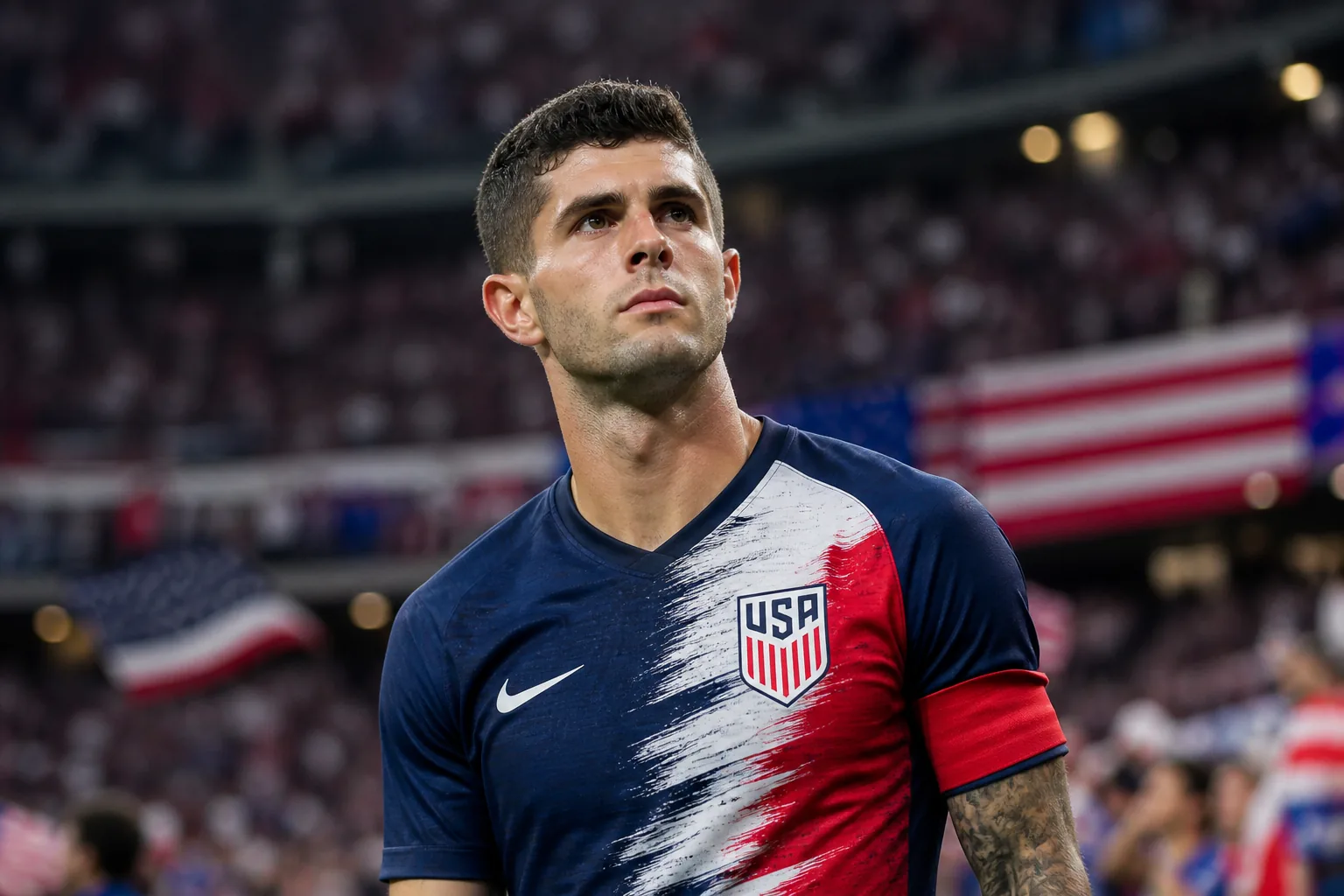
The United States do not have a trophy drought in the usual sense. They have won the CONCACAF Gold Cup seven times, more than almost every team in the region, and lifted the trophy as recently as 2021. Their real drought is more ambitious: the gap between being the power of North and Central America and becoming a serious World Cup contender. The USA have reached a World Cup quarter-final, produced famous upsets and built a generation of players in Europe. They have not reached a World Cup semi-final since 1930 and have never reached the final or won the title.
World Cup 2026 status
The United States qualified automatically as a co-host and played at the 2026 FIFA World Cup on home soil.
| 2026 status | Qualification route | Outcome |
|---|---|---|
| Qualified and participated | Automatic qualification as co-hosts | Round of 16 |

World Cup — lost 6-1 to Argentina

World Cup on home soil — lost 1-0 to Brazil

World Cup — beat Portugal and Mexico, lost 1-0 to Germany

CONCACAF Gold Cup — beat Mexico 1-0 after extra time

World Cup — beat Bosnia and Herzegovina, lost 4-1 to Belgium
The USA's trophy drought has two different meanings
By TrophyDrought's definition, the United States are not waiting for their first major senior men's trophy. The CONCACAF Gold Cup is the top continental championship in the region, and the USA have won it seven times. Their most recent title came in 2021, when they beat Mexico 1-0 after extra time in Las Vegas.
But American football culture usually measures the national team against a different standard: the FIFA World Cup. The USA have never won it or played in a final. Their inaugural 1930 campaign is officially recorded as a third-place finish after a semi-final appearance; in the modern era, their best run remains the 2002 quarter-final. That is the drought this story is really about — not regional silverware, but the missing global breakthrough.
1930: the forgotten American semi-final
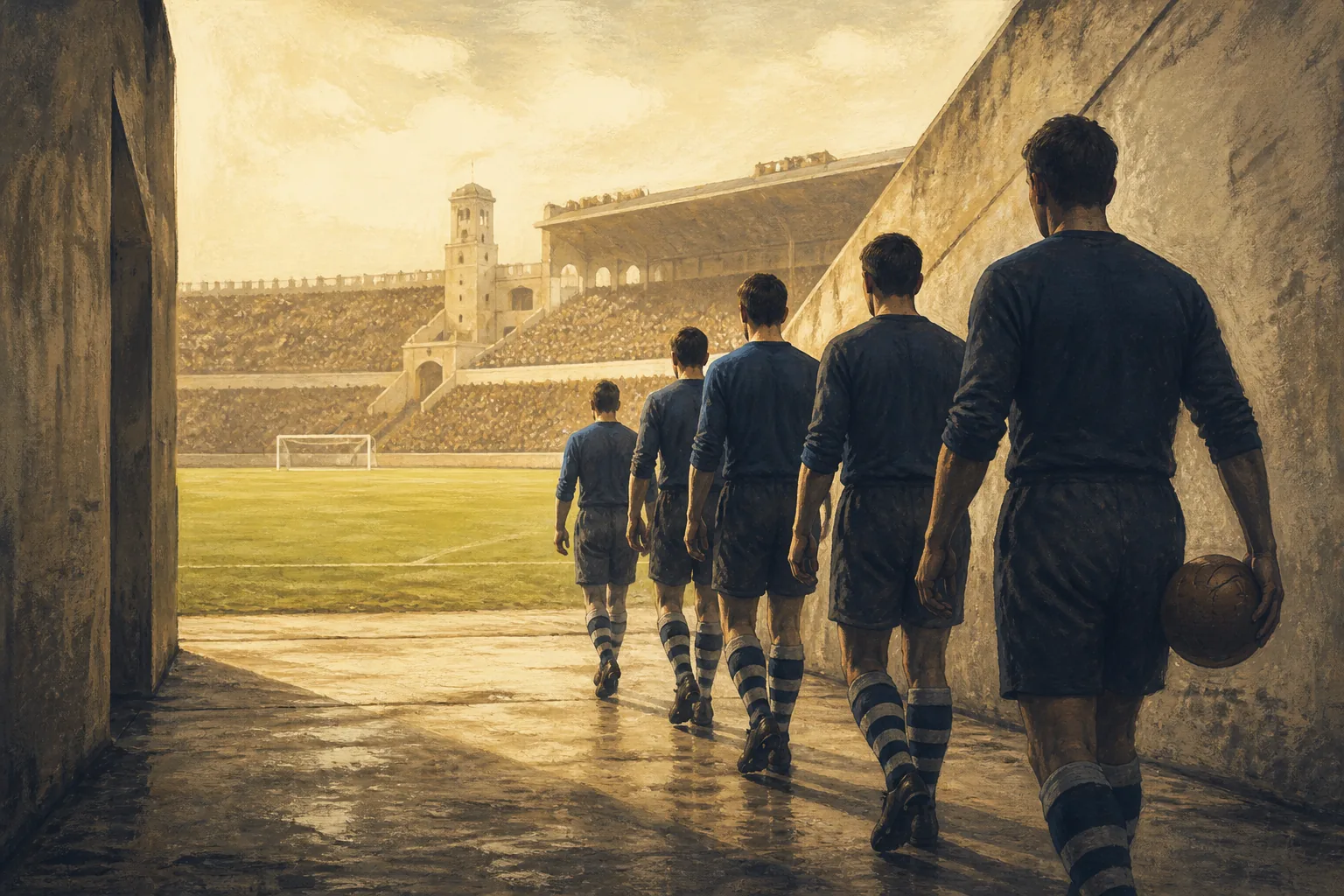
The United States reached the semi-finals at the first World Cup in Uruguay in 1930. That result is still the team's best finish in tournament history, although the early competition was very different from the modern World Cup. The USA won both group matches without conceding, then lost 6-1 to Argentina in the semi-final.
For decades, that run looked like an isolated historical footnote. The sport did not yet have a professional American infrastructure capable of sustaining a national-team challenge. The modern version of the USA had to be built almost from scratch.
1994: hosting the World Cup changes everything
The 1994 World Cup on home soil was the turning point. The USA advanced from the group stage, beat Colombia 2-1 and created a new audience for the men's national team. They lost 1-0 to Brazil in the round of 16, but the tournament left behind stadiums, attention and a clearer pathway for professional players.
The USA did not win a trophy from hosting the World Cup. They gained something more important for the long term: a platform. Major League Soccer followed, youth development expanded and the national team became a regular presence at the finals rather than a historical curiosity.

2002: the quarter-final that still sets the ceiling
The 2002 World Cup remains the clearest evidence that the USA can compete with elite opposition. Bruce Arena's team beat Portugal in the group stage, survived a difficult second round against Mexico with a 2-0 win and reached the quarter-final against Germany.
Germany won 1-0, but the USA had played their way into the last eight through organisation, athleticism and belief. Landon Donovan and Claudio Reyna became symbols of a team that was no longer satisfied with merely qualifying. More than two decades later, that quarter-final is still the modern benchmark the program has not surpassed.
Seven Gold Cups — and the problem of regional comfort
The USA's CONCACAF record is strong enough to hide the global gap. They have won seven Gold Cups and regularly reached the final, often competing with Mexico for regional control. The competition has delivered rivalry, pressure and meaningful knockout experience.
It has also created a difficult comparison. Winning CONCACAF is proof that the USA are a strong team; it is not proof that they are ready to beat France, Brazil, Germany or Argentina across a World Cup knockout bracket. The regional trophy cabinet is full while the global cabinet remains empty.
The 2021 Gold Cup final captured the best version of the regional story. A young USA side beat Mexico after extra time, with Miles Robinson scoring the winner. It was a memorable night and a legitimate major trophy. It also reset the clock: the next challenge was to turn regional dominance into a deeper World Cup run.

The golden generation arrives before the breakthrough
The current generation has more experience in Europe's top leagues than almost any previous USA group. Christian Pulisic became the attacking face of the team, while players such as Weston McKennie, Tyler Adams, Gio Reyna, Sergiño Dest and Folarin Balogun added international-level depth.
That matters because the old American question was whether the USA had enough talent. The new question is whether the talent can stay healthy, develop together and perform in the final two rounds of a World Cup. A deeper player pool raises the floor. It does not automatically raise the ceiling.
2026: progress at home, but not the global leap
The 2026 World Cup was supposed to be the moment the USA turned potential into a statement. The team won Group D, beating Paraguay and Australia, then beat Bosnia and Herzegovina 2-0 in the new round of 32. That victory was the USA's first World Cup knockout win since 2002.
The run ended in the round of 16 with a 4-1 loss to Belgium in Seattle. The USA scored 11 goals, a program record for a single World Cup, and produced more encouraging attacking football than in many previous campaigns. But the outcome was still familiar: a promising tournament, a home crowd, a new generation — and no place in the quarter-finals.
That is why the 2026 tournament belongs in the trophy-drought story. It was not a failure of progress. It was proof that progress alone is no longer enough.
The USA's major tournament record at a glance
| Tournament | Best result | Key year(s) |
|---|---|---|
| FIFA World Cup | Third place | 1930 |
| CONCACAF Gold Cup | Winner | 2021 |
| Major titles | 7 regional | Still chasing global success |
The USA's two trophy scales
What would end the USA's real drought?
The next milestone is not another Gold Cup. The USA have already shown they can win CONCACAF. The target is a World Cup quarter-final followed by a semi-final — the point where a strong tournament becomes a historic one.
To get there, the program needs continuity between coaches, a reliable striker, a settled central midfield and players who can control knockout matches against the world's best. Hosting tournaments can accelerate attention, but it cannot remove the sporting test. The USA's global drought ends only when they beat a heavyweight after the group stage and do it again.
For now, the most interesting part of the story is that the old excuse no longer works. The USA have facilities, investment, a large player pool, European experience and a regional trophy history. Their next breakthrough will be measured against what they have built — not against what they used to lack.
The road from regional champion to world contender


Frequently asked questions
When did the United States last win a major trophy?
The United States last won the CONCACAF Gold Cup in 2021, beating Mexico 1-0 after extra time. They subsequently won the separate Concacaf Nations League in 2023 and 2024; those titles do not reset this World Cup/Gold Cup counter.
How many Gold Cups have the USA won?
The United States have won seven Gold Cups: 1991, 2002, 2005, 2007, 2013, 2017 and 2021. All seven were in the Gold Cup era, not its predecessor CONCACAF Championship.
Has the USA ever won the World Cup?
No. The USA have never won the FIFA World Cup. Their best modern finish is the quarter-final in 2002. Their best historical finish is officially third in 1930 after a semi-final appearance; there was no third-place match.
What was the USA's best result at the 2026 World Cup?
The USA won Group D and beat Bosnia and Herzegovina in the round of 32 before losing 4-1 to Belgium in the round of 16.
Why is the USA's World Cup drought important?
The USA have regional success, professional infrastructure and a generation of players in Europe. The remaining challenge is converting that foundation into a deep World Cup knockout run.
Data sources & verification for United States
Trophy dates are checked against official competition information and the relevant football confederation.
See United States's full trophy history, live counter, and every major final on one page.
View United States's Trophy Drought →Supporting records: Supporting record 1 · Supporting record 2 · Supporting record 3.