 Netherlands Now · Oranje
Oranje.Reimagined.
Netherlands completed the opening Nations League window with 2 wins, 2 draws and 0 defeats: 8 points, 7 goals scored and 5 conceded from four games. Netherlands v Greece is scheduled for 13 November 2026 at 20:45 CET in UEFA Nations League · A2.
 Netherlands
Latest result: Netherlands 2–1 Serbia
Full time · 4 October 2026Netherlands completed the opening Nations League window with 2 wins, 2 draws and 0 defeats: 8 points, 7 goals scored and 5 conceded from four games.
Netherlands v Greece is scheduled for 13 November 2026 at 20:45 CET in UEFA Nations League · A2. See the results and next schedule.
Result: match report or official results.
Where the Netherlands stand now
Netherlands completed the opening Nations League window with 2 wins, 2 draws and 0 defeats: 8 points, 7 goals scored and 5 conceded from four games. Netherlands v Greece is scheduled for 13 November 2026 at 20:45 CET in UEFA Nations League · A2.
The summer left a striking contradiction: Oranje won their group, scored freely and still went home after the first knockout round. That is the starting point for this page — not a claim that the whole team is broken, and not a reason to pretend the penalty shootout explains everything. The next matches offer a chance to see which relationships survive the change of coach.
Netherlands 2–1 Serbia
Netherlands completed the opening Nations League window with 2 wins, 2 draws and 0 defeats: 8 points, 7 goals scored and 5 conceded from four games.
Netherlands v Greece
Netherlands v Greece is scheduled for 13 November 2026 at 20:45 CET in UEFA Nations League · A2.
The next squad is a separate announcement
The completed window establishes results and appearances. November selection, withdrawals and starting roles need fresh confirmation.
Verified context: OnsOranje's World Cup record, coaching announcement and Nations League programme. Tactical judgments below are editorial analysis, not statements from the coaching staff.
Four matches. Plenty of goals. An early exit.
2026 World Cup reviewScores are shown from the Netherlands' perspective. Dates follow OnsOranje's Netherlands-time listings: the Morocco match was June 29 locally in Mexico, June 30 in the Netherlands. Match totals include extra time but exclude penalty shootouts.
Goals scored and conceded
Two wins, two draws; 11 goals for and five against. Shootout kicks excluded.
First place in Group F. The group supplied evidence of attacking quality, not a guarantee of knockout progress.
Clean sheets across four matches. Winning a high-scoring game and controlling its dangerous moments are different things.
The decisive shootout against Morocco. Its kicks are not added to the match score or the goals chart.
The 5–1 win over Sweden showed an attack with more than one route to goal: Brobbey and Gakpo both scored twice. But tournament totals can flatter a side if the goals are concentrated in one afternoon. The opener against Japan ended 2–2; Morocco then forced another draw before winning the shootout.
Against Morocco, Koeman selected five defenders. The federation's match report describes a trade-off: greater protection at the back, but limited attacking opportunities. Gakpo eventually put Oranje ahead; the late equaliser turned the evening into extra time and penalties. That sequence invites a more interesting discussion than simply asking who missed from the spot.
For the next cycle, the issue is how to defend a lead without handing over every useful stretch of possession. A forward who can hold the ball, a midfielder who offers an escape pass and a team willing to move up behind them can relieve pressure. These are analytical questions, not conclusions that can be proved by four scorelines alone.
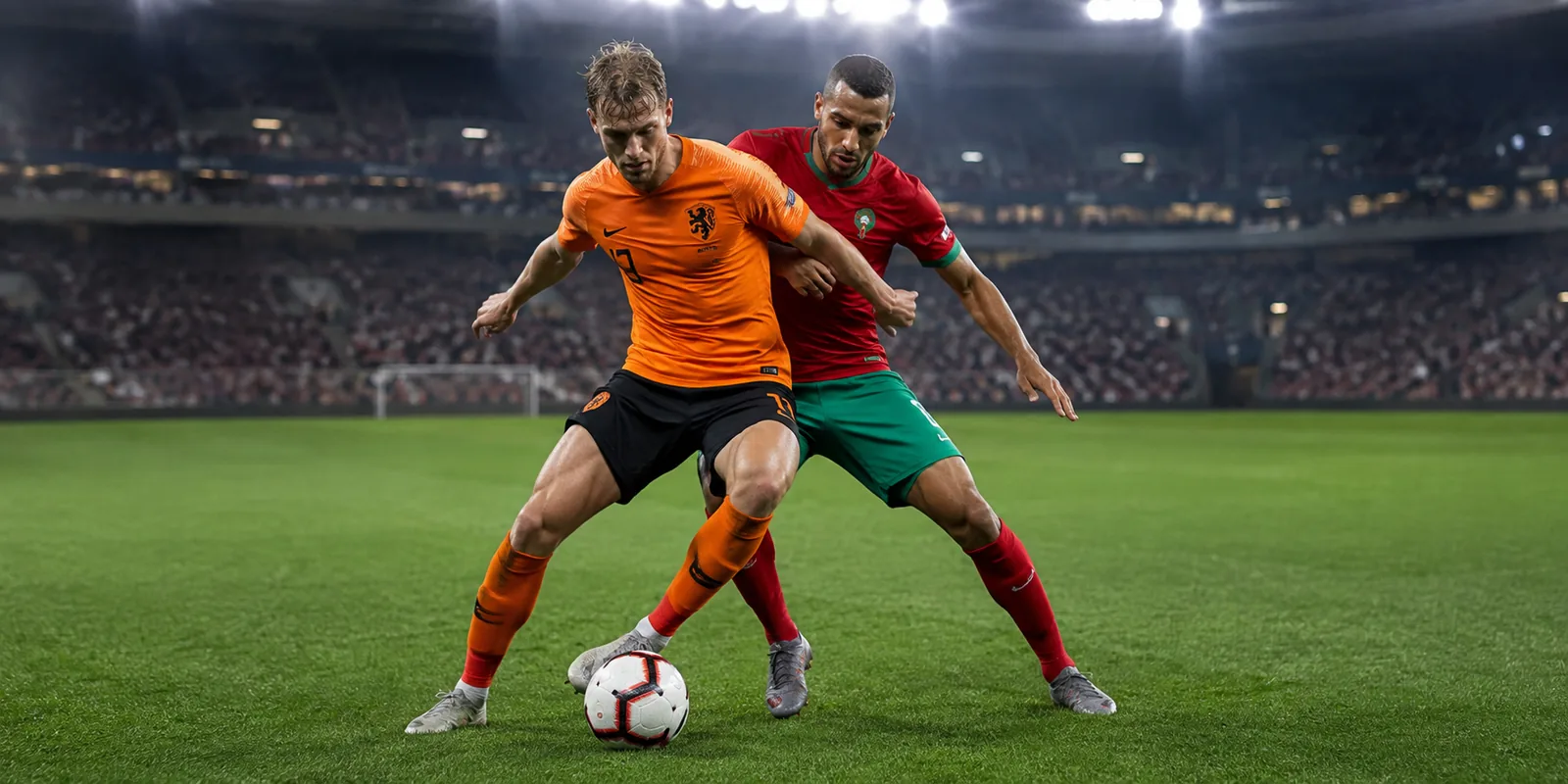
Results: OnsOranje. Elimination and shootout: CAF match report. Totals are calculated from the four published scores. The 1–1 with Morocco is a draw in these match statistics, but Oranje lost the tie and were eliminated.
Netherlands next matches: the autumn schedule
Nations League · Group A2Netherlands completed the opening Nations League window with 2 wins, 2 draws and 0 defeats: 8 points, 7 goals scored and 5 conceded from four games. Netherlands v Greece is scheduled for 13 November 2026 at 20:45 CET in UEFA Nations League · A2.
Confirmed schedule: official competition or organiser listing.

Meet the opponents through our Germany, Serbia and Greece country pages. The next matches are part of a competition, not a series of unrelated auditions.
Cody Gakpo: the threat Oranje can build around
Player focusA scorer, but not only a finishing touch
Gakpo's summer supplied the clearest reason to keep attacking possibilities at the centre of the discussion. The next task is to make his best receiving positions easier to find.
Gakpo's 2026 goals: two in FIFA's Sweden report and one against Morocco. Career World Cup total: FIFA's Dutch scoring list. EURO 2024: UEFA's shared top-scorer award. These figures refer to different competitions and are not a calendar-year total.
A winger's influence starts before the final touch. If Gakpo holds his width, the full-back must decide whether to follow him or protect the inside channel. If he moves inside too early, the defence may be able to close both the winger and the striker with the same narrow shape. Timing is what makes the movement useful.
The Sweden match offers a concrete example of complementary roles: Gakpo's delivery helped Brobbey score, while Dumfries supplied another cross for the striker. That does not establish a permanent starting trio. It does show why discussion of the attack should include the player making the run, the player moving the defender and the player who delivers the ball.
For Gakpo, a successful next window need not mean scoring in every match. More repeated chances, fewer touches with his back to a crowded defence and a dependable second route when opponents block his side would be useful signs. Those are things to watch, not statistics we claim to have measured already.
For the longer context behind today's expectations, read Netherlands Trophy Drought: Three World Cup Finals, One Crown. This page focuses on what the current players can change next.
Three connections that could shape the new Oranje
Editorial analysis
Explore the attacking relationships
Select a focus to change the passing routes. This simplified attacking-phase diagram is an editorial model, not tracking data, Xavi's confirmed system or a predicted starting XI. Only the relationships under discussion are shown.
Find Gakpo facing goal
Gakpo can start wide and arrive inside once the passing lane opens. De Jong provides the first connection, while a central runner occupies the centre-backs. The aim is a forward-facing touch, not simply another pass to a marked winger.
Give De Jong more than one exit
A midfielder can beat the first press only to find the next pass closed. Staggered support gives the receiver a forward option and a safe return without putting everyone on the same horizontal line.
Make both sides matter
Gakpo's threat on one side becomes harder to contain if Dumfries can arrive on the other. The switch must travel while the defence is moving, not after it has already reset.
Separate the jobs
Progressing the ball, arriving near the striker and protecting the centre are different tasks. The question is how the midfield shares them, not how many technically gifted players fit on a team sheet.
Keep an outlet when leading
A team protecting an advantage still needs a player who can receive and hold the next clearance. Otherwise every recovered ball becomes the start of another defensive phase.
Six players, six questions
A watchlist, not a squad announcementThese players featured in Oranje's World Cup group against Tunisia. Their inclusion here reflects the June 26, 2026 World Cup team sheet and does not establish November selection, fitness or starting status.
Cody Gakpo
Can Oranje find him before the full-back has support? His best moments may depend as much on the speed of the preceding pass as on the duel he wins himself.
Frenkie de Jong
How often can the first receiving turn lead to a forward pass? The positions around him will decide whether beating one opponent really moves the whole attack.
Tijjani Reijnders
Who links the midfield to the striker when Gakpo stays wide? A well-timed arrival can open that connection without permanently occupying the forward's space.
Ryan Gravenberch
Can the supporting midfielder stay close enough to help possession and still protect the centre if the ball is lost? That compromise sits behind many attacking choices.
Denzel Dumfries
When does the run begin, and who covers it? An aggressive arrival can stretch the defence, but the players behind the ball must move as part of the same action.
Brian Brobbey
Can the central forward give Oranje both an outlet and a target? Holding up the ball and attacking a cross are different ways to keep teammates involved.
The Xavi era: identity needs evidence
The next competitive cycle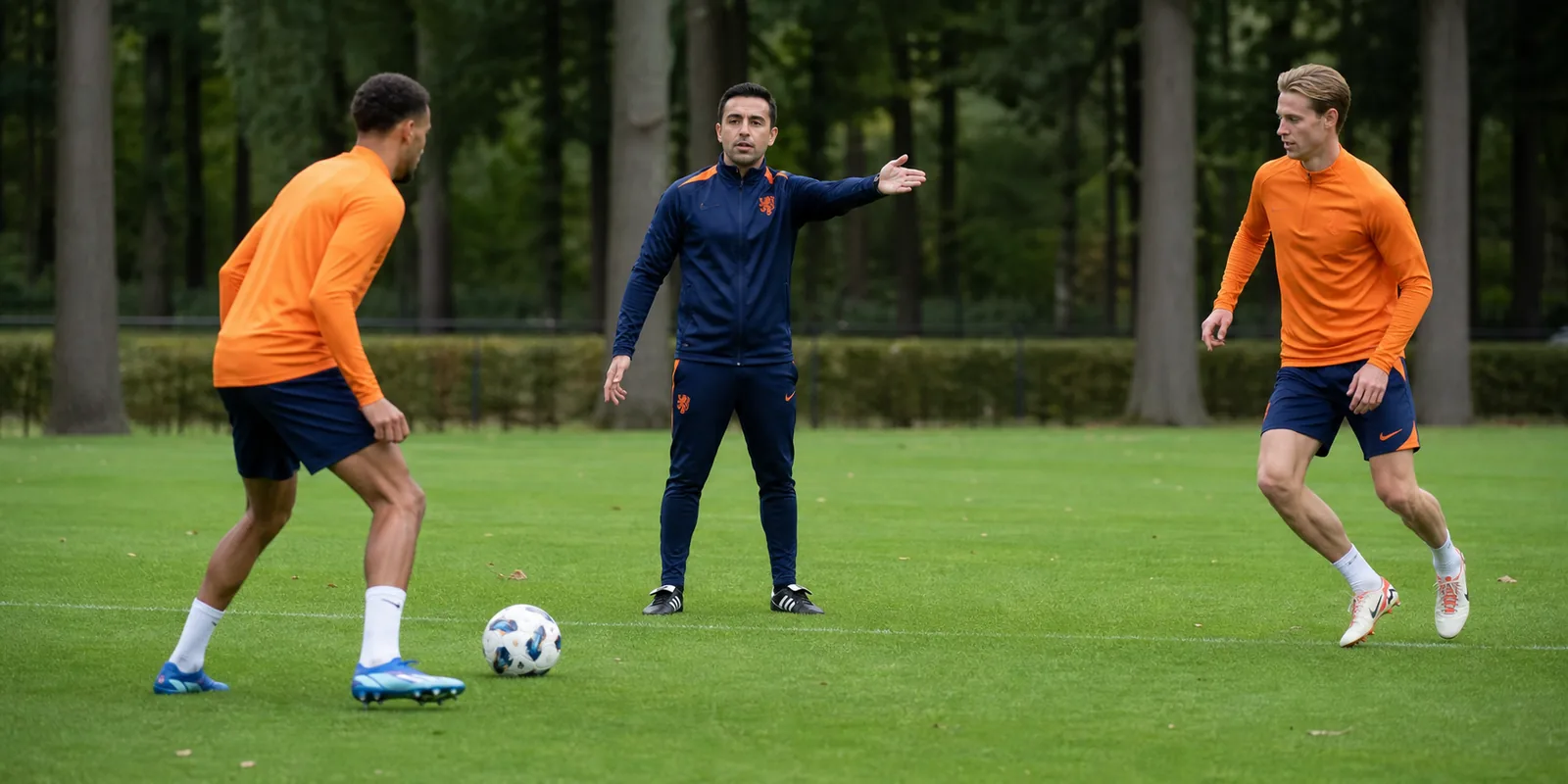
Four Nations League matches now provide an initial basis for assessing Xavi's approach. That skips the difficult part. International coaching is about teaching a small number of ideas in limited time, then choosing which details matter most against a particular opponent.
It will be worth watching the ordinary decisions. Does the same receiving pattern appear across different lineups? Does a substitution preserve the team's balance? Can Oranje change the tempo without losing their structure? Those observations would tell us more than a possession percentage viewed in isolation.
The confirmed coaching staff combines Xavi's collaborators with returning Dutch staff members. That is a factual starting point, not proof of how the team will play. The new approach still has to survive travel, short preparation windows and opponents who are trying to disrupt it.
First, compete in the Nations League
The immediate target is a top-two finish in Group A2 and a place in the March 2027 quarter-finals. EURO 2028 qualifying follows a separate draw and calendar. Progress in one competition should not be confused with qualification for the other.
Nations League progression: KNVB group announcement. EURO qualifying timeline: UEFA's draw announcement. The Netherlands are not presented here as already qualified.
For the honours, finals and long historical perspective, visit the Netherlands country page. For the full feature, read the Netherlands trophy-drought story. Netherlands Now adds the current chapter without replacing either.
Netherlands now: frequently asked questions
Quick answersWhen is the Netherlands' next match?
Netherlands v Greece is scheduled for 13 November 2026 at 20:45 CET in UEFA Nations League · A2.
Who is the new Netherlands manager?
Xavi Hernández succeeded Ronald Koeman. The KNVB announced his appointment on August 12, 2026, with a contract through the 2030 World Cup.
How far did the Netherlands get at the 2026 World Cup?
Oranje won Group F and went out in the round of 32 against Morocco: 1–1 after extra time, followed by a 3–2 defeat in the penalty shootout.
Why does the World Cup record show no match losses?
The results chart counts scores after extra time, excluding shootouts. The Morocco match is therefore a draw in the W/D/L totals, while the separate shootout result explains the elimination. Zero match losses does not mean the Netherlands advanced.
How many goals did Cody Gakpo score in 2026?
At the 2026 World Cup, Gakpo scored three goals: two against Sweden and one against Morocco. This is a tournament total, not his total for the calendar year.
Who are the Netherlands' Nations League opponents?
The Netherlands are in League A Group A2 with Germany, Serbia and Greece. They play each opponent at home and away, for six matches.
Is this the confirmed Netherlands squad?
No. The player watchlist and tactical diagram are editorial analysis, not confirmation of November selection, current fitness or a starting XI. Consult the latest OnsOranje announcement for selection news.
Have the Netherlands qualified for EURO 2028?
This page does not list Oranje as qualified. The qualifying draw is scheduled for December 6, 2026, in Belfast, with group matches from March to November 2027.
Sources and update policy
Match records, coaching announcements and fixtures are checked against OnsOranje, FIFA, UEFA and the relevant confederation reports. Links beside the factual sections identify the supporting sources. The tactical model and player-role discussion are our editorial interpretation.
This is a manually updated editorial page, not a live news feed. New selections, injuries, venues and results need verification before publication. The chart calculates from the score table; the countdown points to a scheduled kick-off and does not report a live match. Illustrations are conceptual scenes, not documentary photographs.
- KNVB / OnsOranje · Xavi appointment · August 12, 2026
- KNVB / OnsOranje · confirmed coaching staff · August 22, 2026
- OnsOranje · World Cup results and Netherlands-time dates
- OnsOranje · Netherlands–Morocco match analysis
- CAF · Morocco shootout result and extra-time score
- FIFA · Netherlands 5–1 Sweden
- AFC · Netherlands 2–2 Japan
- OnsOranje · Tunisia–Netherlands match sheet
- FIFA · Netherlands' all-time World Cup scorers
- UEFA · EURO 2024 shared top scorers
- OnsOranje · six Nations League fixtures and venues
- OnsOranje · Serbia and Greece local match details
- KNVB / OnsOranje · Nations League group and progression
- UEFA · EURO 2028 qualifying draw and calendar
Latest result and next calendar: verified report · confirmed next schedule.