
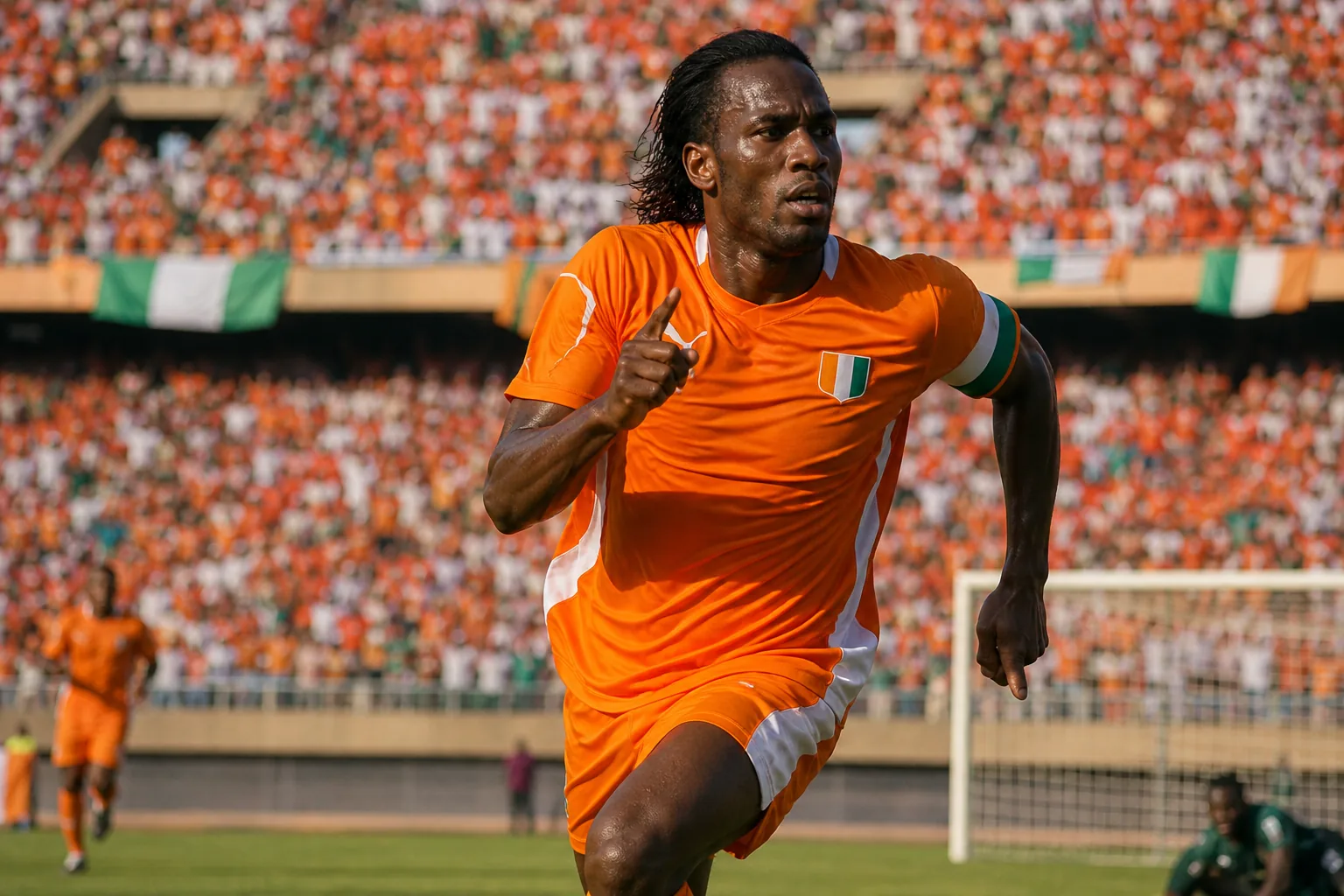
Ivory Coast produced one of Africa's most talented generations, led by Didier Drogba, Yaya Touré and the Toure brothers. The Elephants reached the 2006 and 2012 Africa Cup of Nations finals, losing both on penalties, before finally winning the trophy in 2015. Their story is about the emotional cost of repeated near-misses and the relief of a title that arrived after the golden generation had almost run out of time.
World Cup 2026 status
Ivory Coast qualified for the 2026 FIFA World Cup and reached the round of 32.
| 2026 status | Qualification route | Outcome |
|---|---|---|
| Qualified and participated | CAF qualifying | Round of 32 |

Ivory Coast beat Ghana on penalties to win its first AFCON

Egypt beat Ivory Coast on penalties in the AFCON final

Zambia beat Ivory Coast on penalties in the AFCON final

Ivory Coast made its third consecutive World Cup appearance
Ivory Coast beat Ghana on penalties to win AFCON

Ivory Coast returned to the World Cup stage
Still waiting for a third AFCON title
A golden generation that had to lose before it could win
Ivory Coast have won AFCON twice, in 1992 and 2015, but the country's modern football identity was shaped by the long gap between those titles. The Elephants became a regular World Cup team and a continental favourite, yet the final kept slipping away.
That tension made the 2015 victory especially powerful. The team was not only fighting an opponent; it was carrying the memory of every penalty shootout that had ended the previous generation's best campaigns.
1992: the first AFCON crown
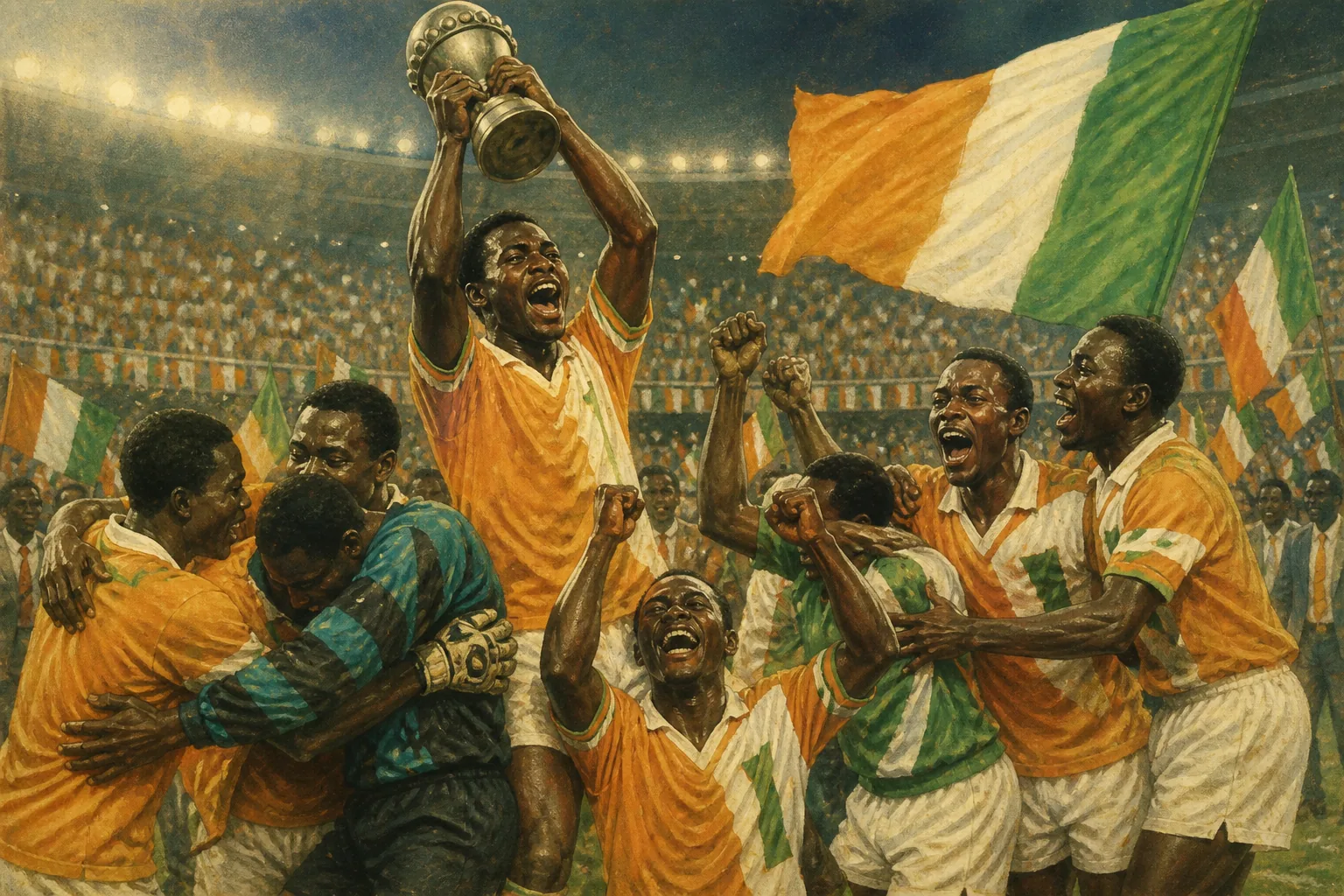
Ivory Coast won its first Africa Cup of Nations in Senegal in 1992. The final against Ghana finished 0-0 after extra time, and the Elephants won a marathon penalty shootout 11-10.
The title established Ivory Coast as a major African football nation, but it would take 23 years for the next championship. Between the two victories, the country produced stronger squads and bigger stars without finding the final touch.
Ivory Coast's tournament profile
2006 and 2012: two finals lost on penalties
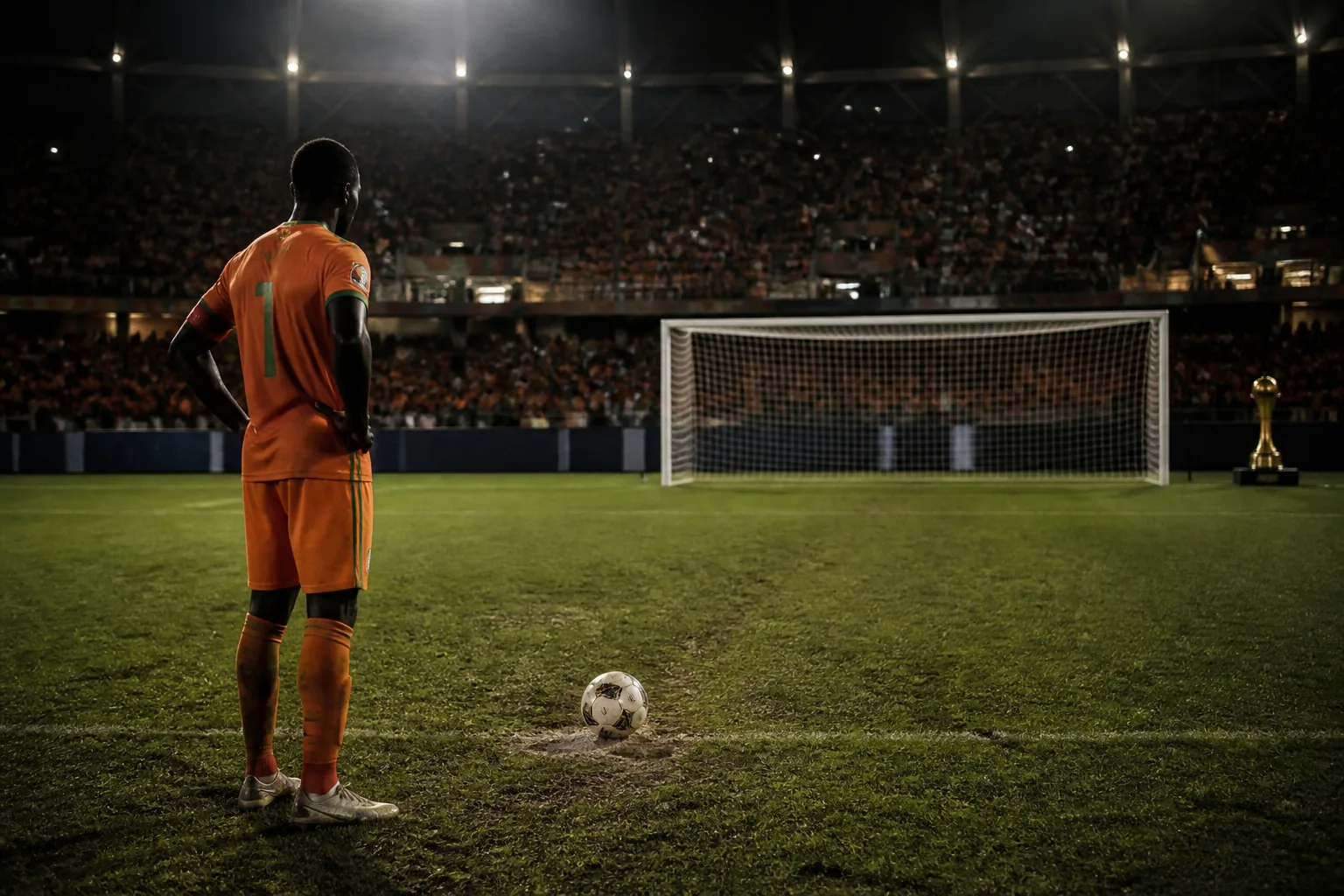
Ivory Coast reached the 2006 AFCON final with Drogba leading the attack, but Egypt won the shootout after a 0-0 draw. Six years later, the Elephants reached the final again and lost to Zambia on penalties.
The 2012 defeat was especially cruel. Ivory Coast had the star power, defensive strength and experience to win, but the final still ended with the same unbearable sequence: a missed kick, a save and another trophy for the opponent.
The World Cup generation that never left the group
Ivory Coast qualified for three consecutive World Cups between 2006 and 2014. Each appearance featured a difficult group and moments of high quality, but the Elephants never reached the knockout stage.
The contrast was striking. Drogba and his teammates could compete with Argentina, the Netherlands and Japan, yet they never assembled the results needed to survive the group. The World Cup remained the one stage where the golden generation did not complete its promise.
2015: the shootout finally goes Ivory Coast's way
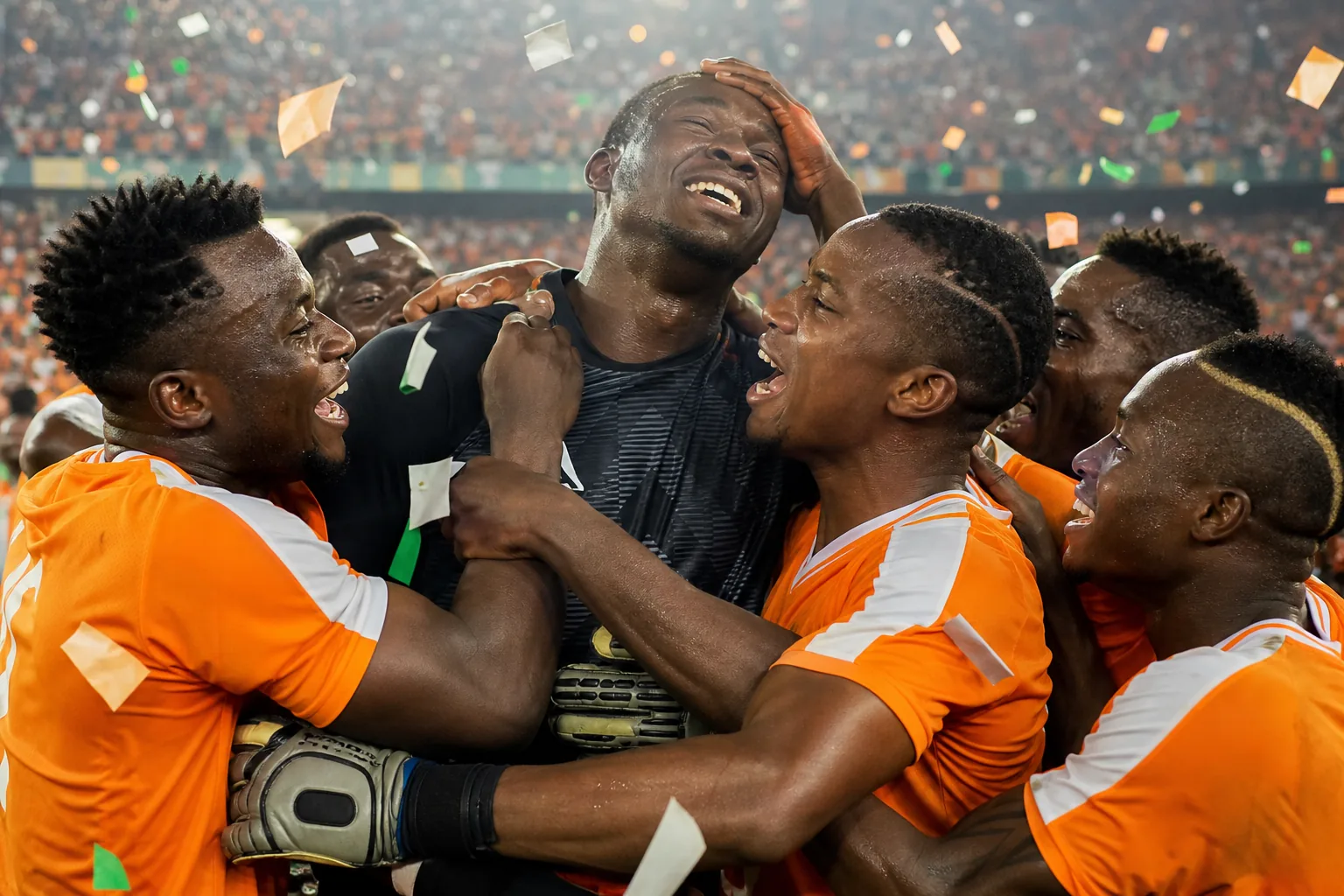
Ivory Coast returned to the AFCON final in 2015 against Ghana. The match finished 0-0 after extra time, creating an immediate memory of the previous disappointments. This time the penalty shootout lasted 22 kicks before Ghana's goalkeeper missed and Copa Barry scored the winner.
It was a victory of emotional endurance. Yaya Touré lifted the trophy, while the team that had carried so many final defeats finally had a moment of release. Ivory Coast were champions again, and the golden generation had its medal.
After Drogba: a new Elephants team
The challenge after 2015 was replacing the personalities that had defined the national side. Drogba's goals, Yaya Touré's control and the experience of the old defence could not be reproduced by one player.
Ivory Coast now need a deeper pathway from domestic football to the international stage. The 2026 World Cup gives a new generation a chance to create a story that is not built only around the memories of the previous champions.
Ivory Coast's major tournament record at a glance
| Tournament | Best result | Most recent |
|---|---|---|
| FIFA World Cup | Group stage | 2014 |
| Africa Cup of Nations | Winner | 2015 |
| AFCON titles | 2 | 1992, 2015 |
| Current major-trophy wait | 11 years | Since 2015 |
What would define Ivory Coast's next era?
Ivory Coast need another AFCON title to prove that 2015 was the beginning of a stable champion program rather than the final success of one remarkable generation. The country has the football culture and talent; the next step is continuity.
The World Cup target is also unfinished. Reaching the knockout stage would give the Elephants a global result to match their best African performances and honour the generation that qualified three times without progressing.
Ivory Coast's most memorable trophy was won after the team learned how to live with disappointment. The next champions must learn how to build on victory.
The road from Drogba's near-misses to Ivory Coast's champion generation
Frequently asked questions
How many AFCON titles has Ivory Coast won?
Ivory Coast have won two Africa Cup of Nations titles, in 1992 and 2015.
When did Ivory Coast last win a major trophy?
Ivory Coast last won AFCON in 2015, beating Ghana on penalties in the final.
Why were the 2006 and 2012 finals so painful?
Ivory Coast lost both finals on penalties, despite having a talented generation led by Didier Drogba and Yaya Touré.
What is Ivory Coast's best World Cup result?
Ivory Coast have never reached the World Cup knockout stage. Their best period included three consecutive appearances from 2006 to 2014.
Can Ivory Coast win another AFCON?
Yes. Ivory Coast have already won twice and returned to the World Cup in 2026, but the next generation must build continuity after the Drogba era.
Data sources & verification for Ivory Coast
Last verified 2026-09-09. Trophy dates are checked against official competition information and the relevant football confederation.
See Ivory Coast's full trophy history, live counter, World Cup record and major-tournament profile.
View Ivory Coast's country profile →