
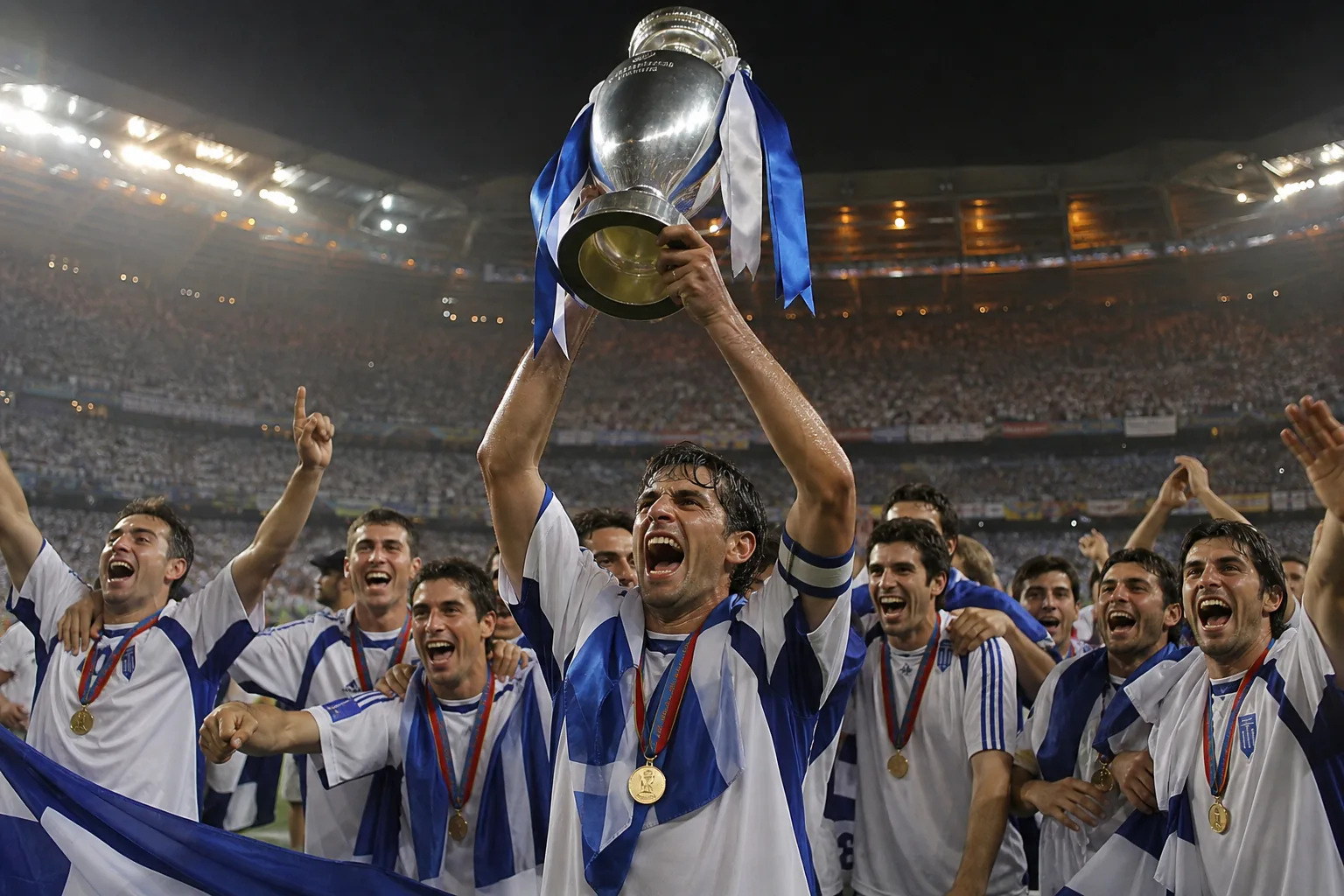
Before the summer of 2004, Greece had played at exactly two major tournaments in their history and won a total of zero matches. They arrived at Euro 2004 as 150-1 outsiders, a team nobody outside Greece could name more than one or two players from, in a tournament full of genuine superstars — reigning champions France with Zidane and Henry, hosts Portugal with Figo and a teenage Cristiano Ronaldo. Greece beat the hosts in the opening match. They beat the defending champions in the quarterfinal. They beat the tournament's most exciting attacking side in the semifinal. Then they beat the hosts again, in the final, to become champions of Europe without a single recognizable superstar on the pitch.
World Cup 2026 status
Greece entered the UEFA qualifying route for the 2026 FIFA World Cup but did not reach the finals, extending the wait since the 2014 tournament.
| 2026 status | Qualification route | Outcome |
|---|---|---|
| Entered qualifying; did not qualify | UEFA qualifying | Did not reach the finals |

Euro debut — lost all three, no goals scored

World Cup — lost all three, 0 scored, 10 conceded

Euro, in Portugal

Euro — winless, same group as champions Spain

World Cup — first-ever WC win, beat Nigeria
Euro
Greece Before 2004: A Footnote in European Football
Greece's tournament history before 2004 was close to nonexistent. Their first appearance at a major tournament came at Euro 1980, where they lost all three group games without scoring. Fourteen years later they reached the 1994 World Cup and fared even worse: three matches, three defeats, no goals scored, ten conceded. Qualification itself was treated as an achievement. Winning anything was not part of the conversation.
Otto Rehhagel's Revolution
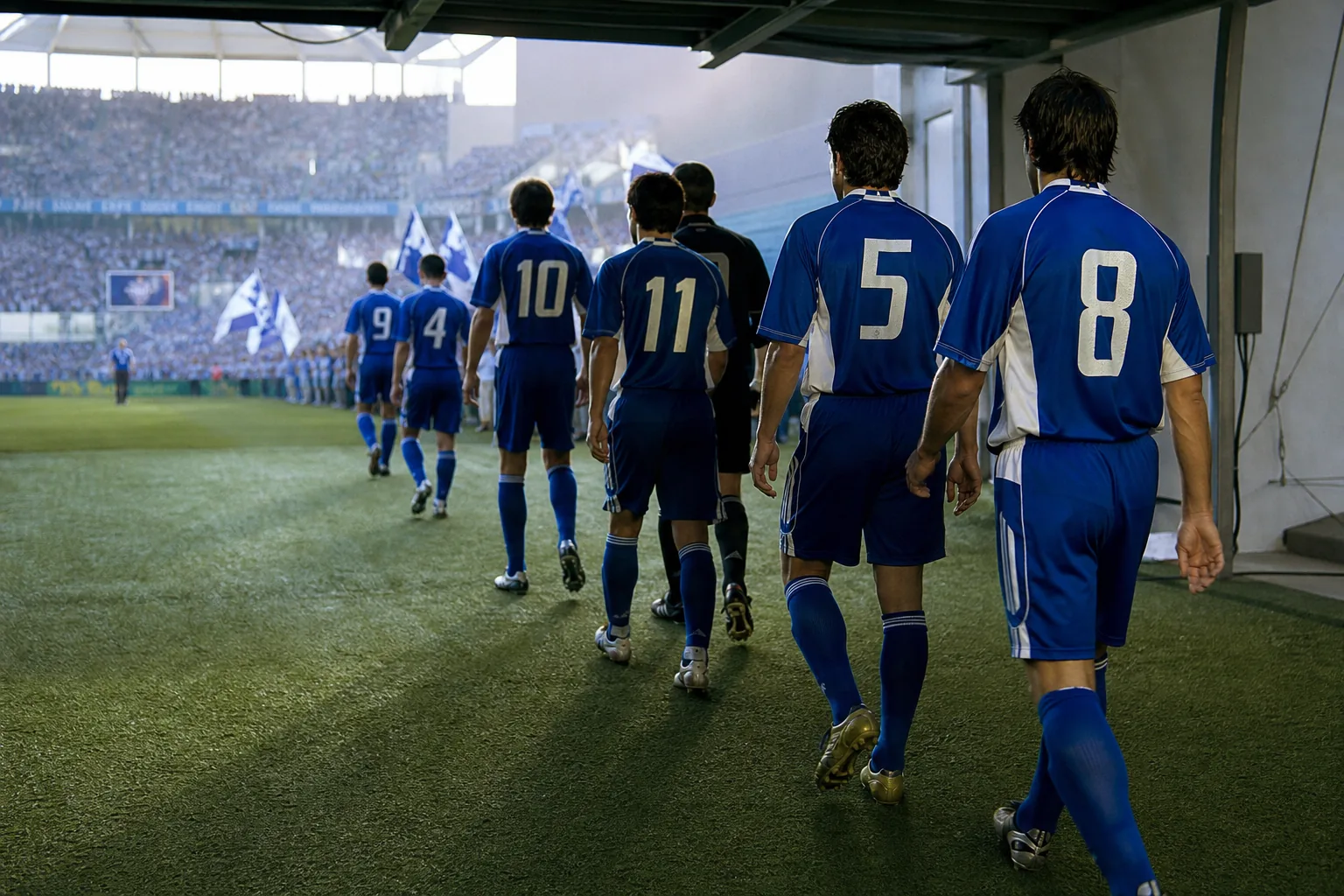
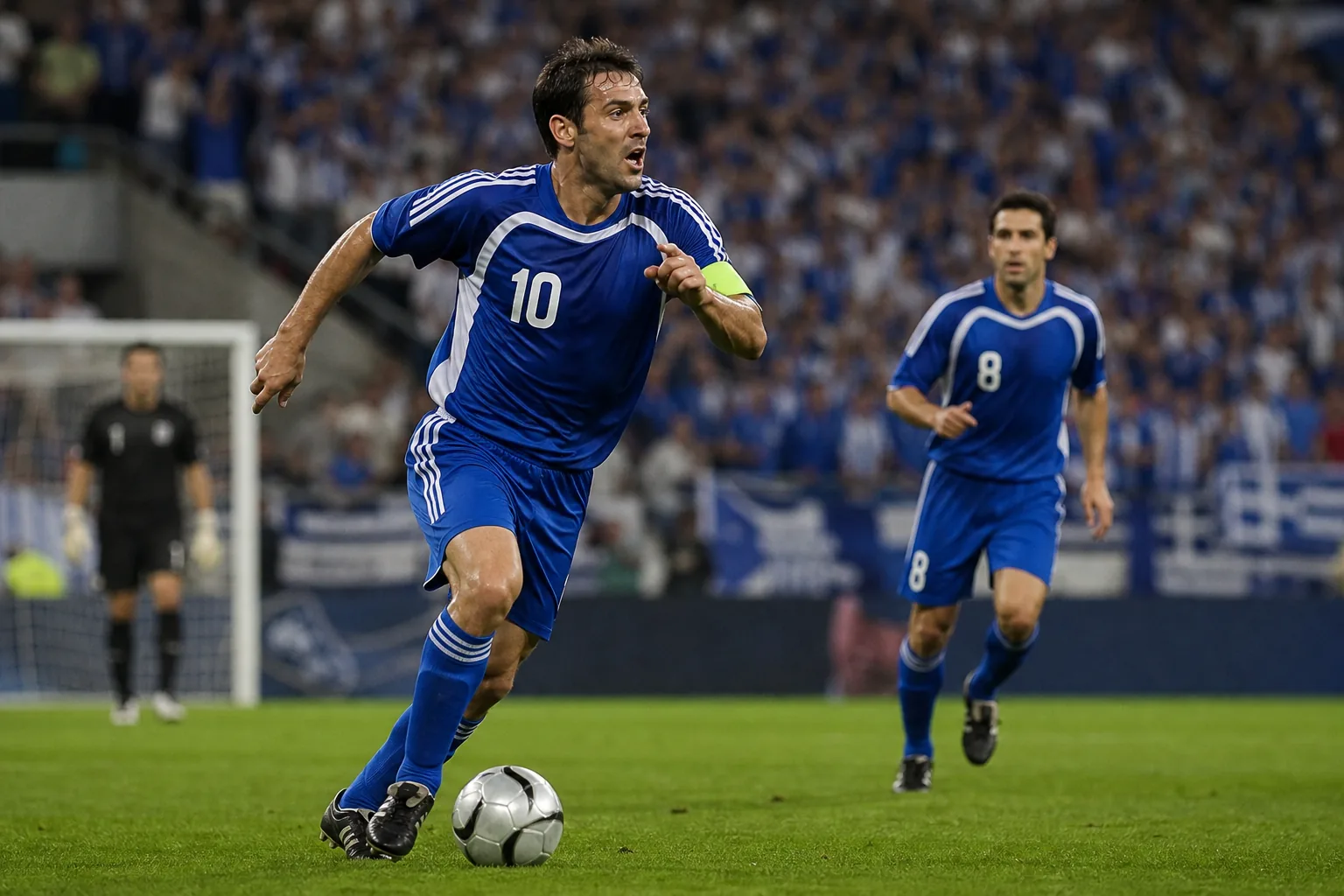
In 2001, the Greek federation hired German coach Otto Rehhagel, best known for guiding newly promoted Kaiserslautern to a shock Bundesliga title in the 1990s. He inherited a squad with no individual stars and built a system around the opposite idea entirely: total defensive discipline, compact spacing, and every player understanding his role without exception. Training was built around positioning and rehearsed set pieces rather than flair. There were no egos in the squad — captain Theodoros Zagorakis covered every blade of midfield, goalkeeper Antonios Nikopolidis anchored the defense with calm, and target man Angelos Charisteas turned into the team's release valve in the air. Nobody outside Greece paid much attention to any of it.
150-1 Outsiders
Bookmakers priced Greece at 150-1 to win the tournament — among the longest odds of any team in the field. France arrived as defending world and European champions, built around Zinedine Zidane, Thierry Henry, and Patrick Vieira. Hosts Portugal fielded Luis Figo and a 19-year-old Cristiano Ronaldo already being talked about as the future of the sport. The Czech Republic, led by Pavel Nedved, were playing some of the tournament's most thrilling attacking football. Greece were an afterthought in every preview. Their opening match, against the host nation, was expected to be a formality for Portugal.
The Group Stage: Shocking the Hosts
Seven minutes into the opening match, Giorgos Karagounis put Greece ahead of Portugal. Angelos Basinas added a penalty in the second half, and although Ronaldo pulled a stoppage-time goal back, Greece held on to win 2-1 — immediately upending the tournament's expected script. They followed it with a battling 1-1 draw against Spain, Charisteas canceling out an early Fernando Morientes goal. In their final group match, Greece lost 2-1 to Russia, but it didn't matter: they advanced to the quarterfinal ahead of Spain on goals scored, 4 to 2, having somehow survived the tournament's toughest group.
Toppling the Champions
Awaiting Greece in the quarterfinal were France, the reigning World Cup and European champions, with arguably the finest midfield in the tournament. Rehhagel's response was the same as ever: compress the pitch, deny space, make every duel a fight. Just after the hour mark, Charisteas rose above two French defenders to head in the only goal of the match, beating goalkeeper Fabien Barthez. France, the tournament favorites, were out. Greece, the 150-1 outsiders, were in the semifinal.
The Only Silver Goal in Tournament History
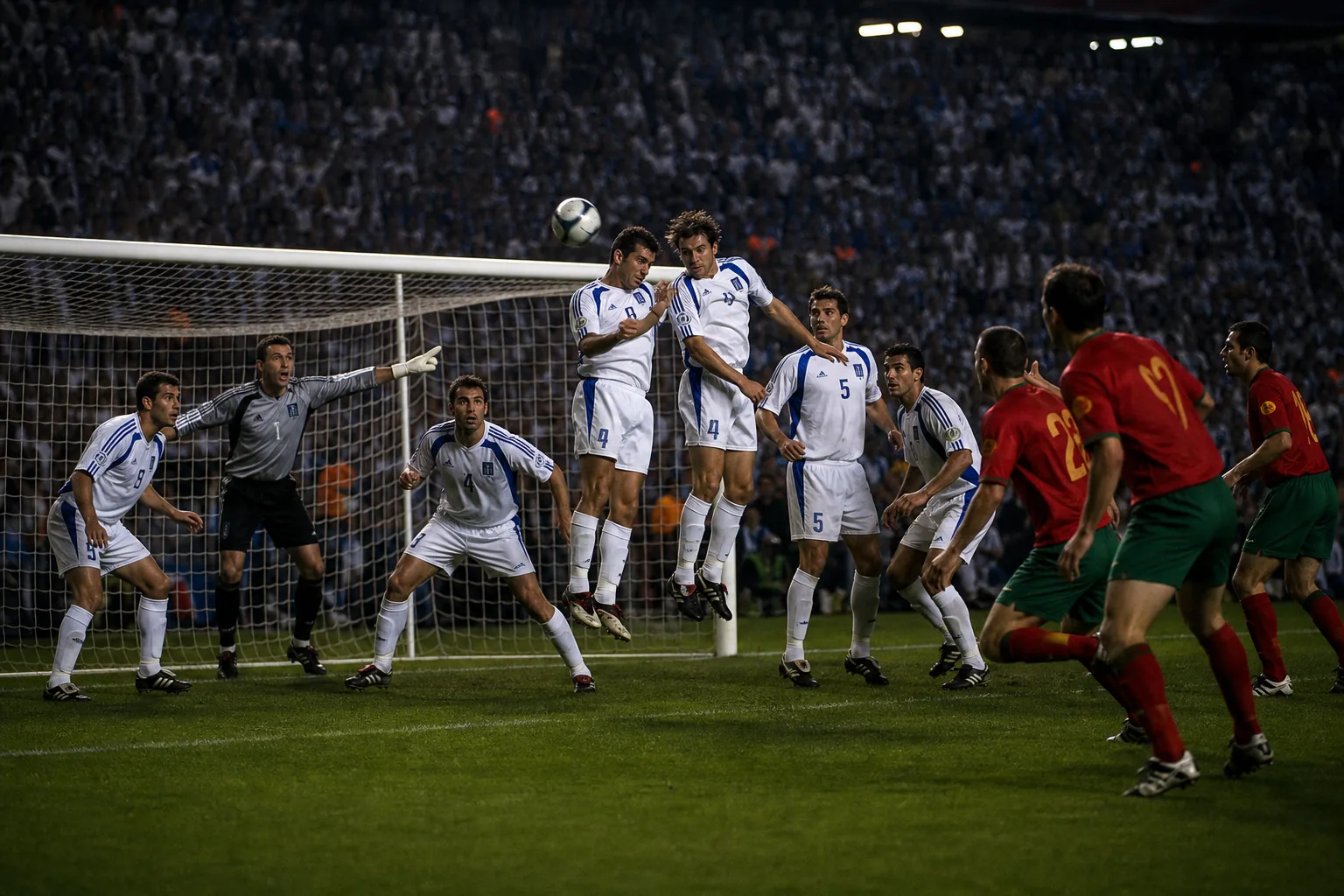
The semifinal brought the Czech Republic, the tournament's most eye-catching attacking team. Pavel Nedved went off injured before halftime, blunting their creativity, but the match still went scoreless into extra time — played that year under UEFA's short-lived "silver goal" rule, where a team leading at the first half-time break of extra time would win outright. Greece won a corner. Traianos Dellas rose to head it in, and the whistle blew for the interval — Greece had won. It remains the only silver goal ever scored at a major international tournament; UEFA scrapped the rule immediately afterward. Greece were through to a European Championship final.
Lisbon's Longest Night: The Final
The final, fittingly, was a rematch with Portugal — the first time in the competition's history the same fixture had opened and closed a tournament. Portugal, who had rebuilt their campaign after the opening-day shock, were favorites again, at home, in front of a stadium desperate for a first major trophy. Rehhagel changed nothing about his approach. Chance after Portuguese chance broke down against a compact Greek defense. Midway through the second half, Greece won a corner, and Charisteas rose again — the same header, the same finisher, the same result. Greece won 1-0. A team that had never won a match at a major tournament before that summer was now champion of Europe.
Portugal's Heartbreak — and a Sequel 12 Years Later
For Portugal, losing a final at home was one of the most painful nights in the country's football history. But it wasn't the end of the story for that generation. A 19-year-old Ronaldo who cried on the Lisbon turf in 2004 would go on to captain Portugal to their own tournament win twelve years later, in equally improbable fashion. We've told that story in full from Portugal's side — including the injury-time twist that made 2016 almost as unlikely as Greece's run in 2004.
Greece's major tournament record at a glance
| Tournament | Best result | Key year(s) |
|---|---|---|
| UEFA European Championship | Winner | 2004 |
| FIFA World Cup | Round of 16 | 2014 |
| Major titles | 1 | Euro 2004 |
Greece's impossible run
After the Miracle
Greece stayed relevant without repeating the magic. They reached Euro 2008 but exited winless in the group stage — the same group as eventual champions Spain. At the 2010 World Cup, they recorded the first World Cup win in the nation's history, beating Nigeria, though it wasn't enough to escape the group. Euro 2012 brought one more run to the quarterfinal, ended by Germany. Since then, qualification for major tournaments has become the exception rather than the rule again. The magic of 2004 has never fully returned — but for one summer, a team of 150-1 outsiders beat the hosts twice, the defending champions once, and the tournament's most talented attacking side once, without a single global superstar on the field.
Road to Euro 2004: Four Matches, Zero Favorites


Related teams and pages
Compare this story with other national teams and continue exploring TrophyDrought.


Frequently asked questions
When did Greece win a major football trophy?
Greece won Euro 2004, beating hosts Portugal 1-0 in the final.
How unlikely was Greece's Euro 2004 victory?
Greece entered the tournament as a major outsider and defeated Portugal twice, France and the Czech Republic on the way to the title.
Has Greece won the World Cup?
No. Greece have never won the FIFA World Cup.
What is Greece's best World Cup result?
Greece's best World Cup result is reaching the round of 16 in 2014.
Data sources & verification for Greece
Last verified 2026-09-15. Trophy dates are checked against official competition information and the relevant football confederation.
See Greece's full trophy history, live counter, and every major final on one page.
View Greece's Trophy Drought →