

Chile spent most of its football history waiting for a major title. Then, in the space of two summers, La Roja won the Copa América twice and defeated Argentina in two finals. Alexis Sánchez, Arturo Vidal, Claudio Bravo and Eduardo Vargas created the greatest generation in Chilean history. Since the 2016 triumph, however, the team has declined, missed multiple World Cups and begun another long wait for a trophy.
World Cup 2026 status
Chile entered the CONMEBOL qualifying route for the 2026 FIFA World Cup but did not reach the finals, extending the wait since the 2014 tournament.
| 2026 status | Qualification route | Outcome |
|---|---|---|
| Entered qualifying; did not qualify | CONMEBOL qualifying | Did not reach the finals |

Chile finished third at the World Cup on home soil

Chile reached the World Cup round of 16 with an attacking team
Chile lost to Brazil on penalties after a dramatic knockout match

Chile beat Argentina on penalties to win its first Copa América
Chile beat Argentina again to defend the continental title
Chile exited the Copa América group stage during the transition

Still waiting for a third Copa América title
The fastest rise and fall of a champion generation
Chile's trophy drought is unusual because it was broken so dramatically and then returned almost immediately. Before 2015, Chile had never won the Copa América. By 2016, the team had two titles and a reputation for fearless pressing, aggressive full-backs and relentless attacking.
The challenge was always going to be replacing that core. When the golden generation aged, Chile lost not only individual quality but the shared understanding that had made the team so difficult to play against.

1962: Chile's World Cup bronze
Chile hosted the 1962 World Cup and finished third, beating Yugoslavia 1-0 in the bronze-medal match. It remains the country's best World Cup result and the only time Chile have reached the semi-final stage.
The tournament gave Chile an early place in global football history, but the national team then spent decades searching for the next great result. The 1962 bronze became a distant reference point until a new generation finally turned potential into trophies.
Chile's tournament profile
2015: the first title arrives at home
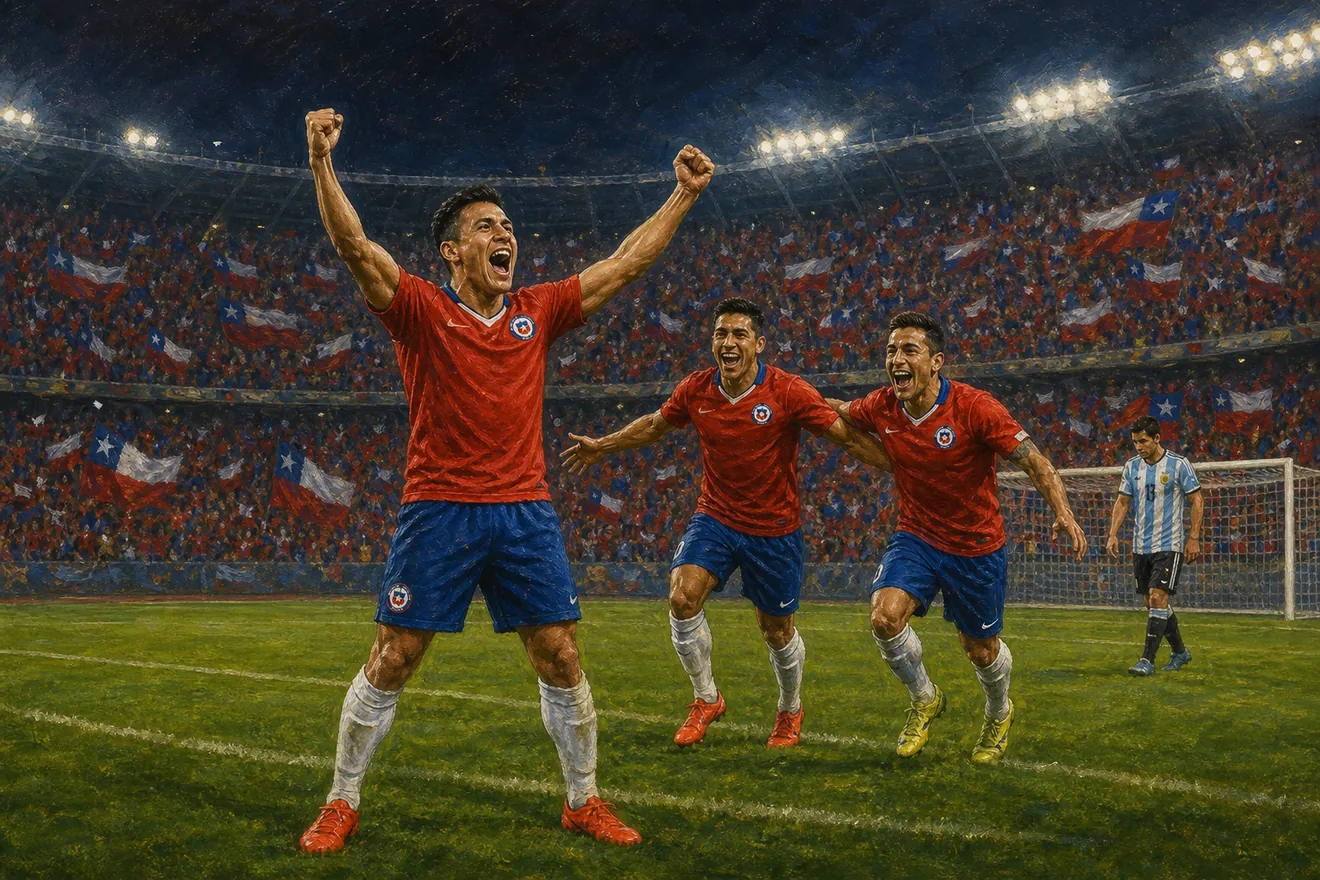
Chile hosted the 2015 Copa América and reached the final against Argentina. The match finished 0-0 after extra time, and Chile won the penalty shootout. Alexis Sánchez scored the decisive Panenka, a moment that instantly became one of the country's most famous football images.
The title was historic for two reasons. Chile had finally won a major senior trophy, and it had done so with a style that matched the country's new confidence. Jorge Sampaoli's team pressed high, attacked with courage and treated every duel as part of a national mission.
2016: beating Argentina again
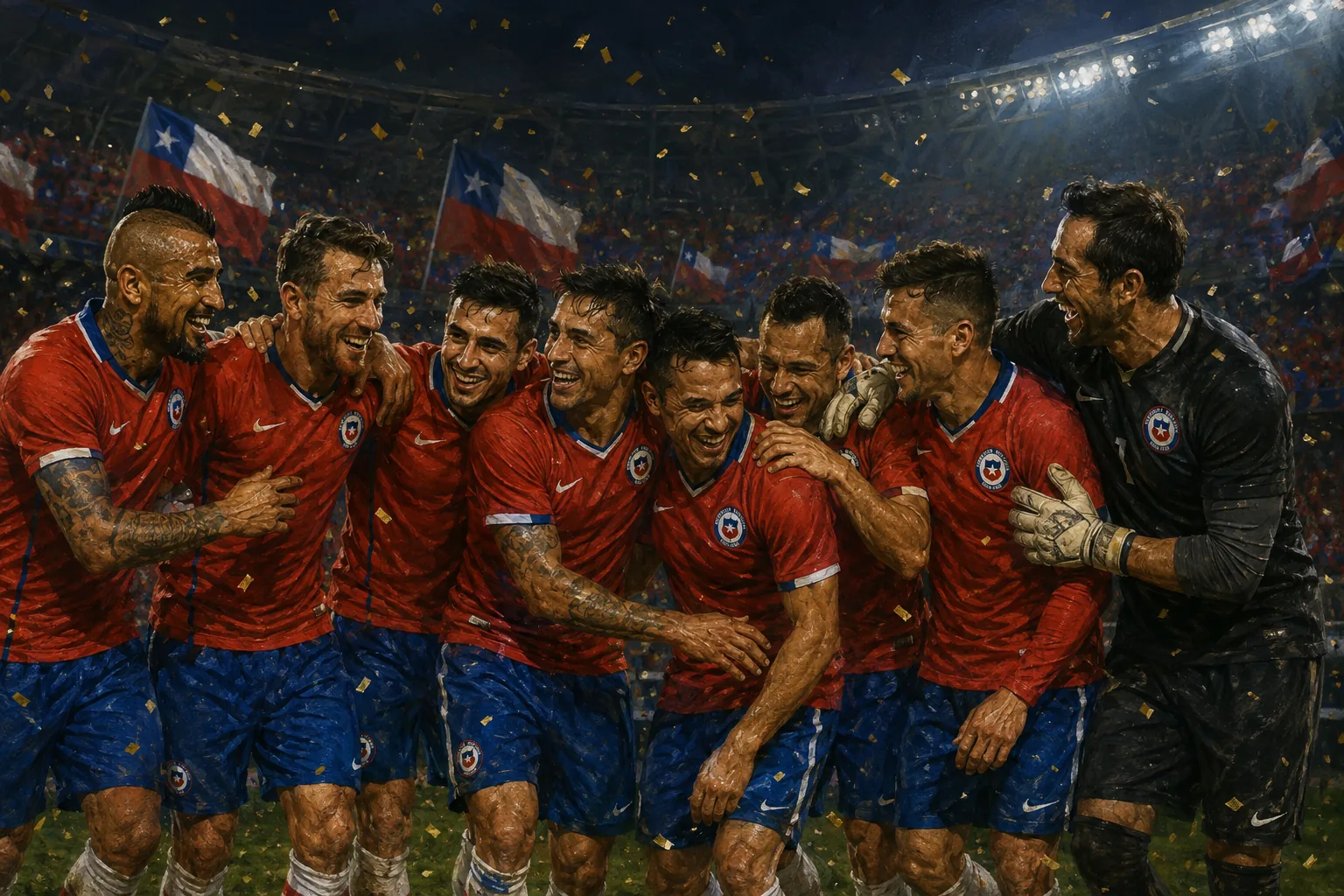
At the Copa América Centenario in the United States, Chile reached the final again and faced Argentina again. The match was another tense 0-0 draw after extra time, and Chile won on penalties.
Claudio Bravo saved from Lucas Biglia before Francisco Silva converted the winning kick. Chile had become back-to-back continental champions, while Lionel Messi's Argentina had lost another final. The victory was the peak of the golden generation and the clearest proof that 2015 had not been a home-tournament accident.
From champions to World Cup absences
Chile missed the 2018 World Cup after losing crucial qualifying points on the final matchday. The 2022 campaign ended without qualification as the golden generation struggled to maintain its physical intensity and the replacement process stalled.
Chile also missed the 2026 tournament, extending the distance from the team that had looked unstoppable in 2015 and 2016. The decline was not caused by one bad result. It was the combined effect of an ageing squad, coaching changes and the difficulty of replacing several elite players at once.
The legacy of Sánchez, Vidal and Bravo
Alexis Sánchez gave Chile decisive goals and relentless movement. Arturo Vidal brought aggression and quality in midfield. Claudio Bravo made the team calm under pressure, while Gary Medel and Charles Aránguiz completed a group that understood how to compete together.
Their legacy is larger than two trophies. They changed what Chilean supporters expected from the national team. A country that had once celebrated qualification now expected finals, titles and performances against the best teams in South America.
Chile's major tournament record at a glance
| Tournament | Best result | Key year(s) |
|---|---|---|
| FIFA World Cup | Third place | 1962 |
| Copa América | Winner | 2016 |
| Copa América titles | 2 | 2015, 2016 |
| Current major-trophy wait | Since 2016 | Ongoing |
What would end Chile's new trophy drought?
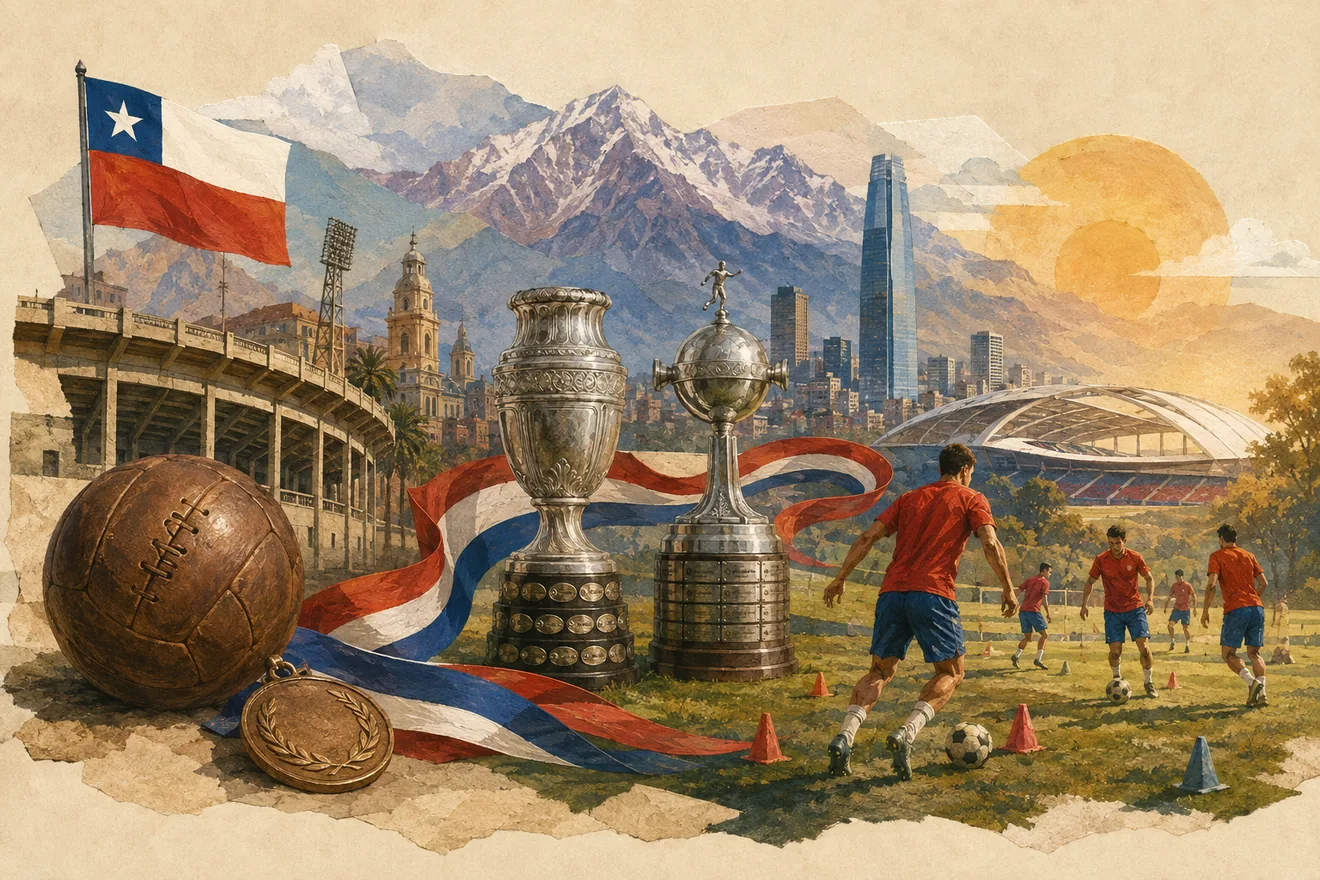
Chile need to build a team that can compete without copying the golden generation. The next squad will need new leaders, more attacking depth and a clear route from youth football to the senior side.
A third Copa América title would prove that the country has recovered from the transition. Returning to the World Cup is equally important: Chile's best recent football deserves a new global stage, and the next generation needs its own tournament memory.
The 2015 and 2016 trophies will always define Chilean football. The next champion team has the chance to turn that golden era from a conclusion into a foundation.
The road from Chile's golden generation to the next title
Frequently asked questions
How many Copa América titles has Chile won?
Chile have won two Copa América titles, in 2015 and 2016.
When did Chile last win a major trophy?
Chile last won a major trophy at the 2016 Copa América Centenario, beating Argentina on penalties.
What is Chile's best World Cup result?
Chile finished third at the 1962 World Cup on home soil, their best result in the competition.
Why were the 2015 and 2016 titles so important?
They were Chile's first major senior trophies and came in back-to-back finals against Argentina, establishing the country's golden generation.
Can Chile win another Copa América?
Yes. Chile have a strong football culture and a proven champion identity, but the next generation must replace the leaders of the 2015-2016 team.
Data sources & verification for Chile
Trophy dates are checked against official competition information and the relevant football confederation.
See Chile's full trophy history, live counter, World Cup record and major-tournament profile.
View Chile's country profile →